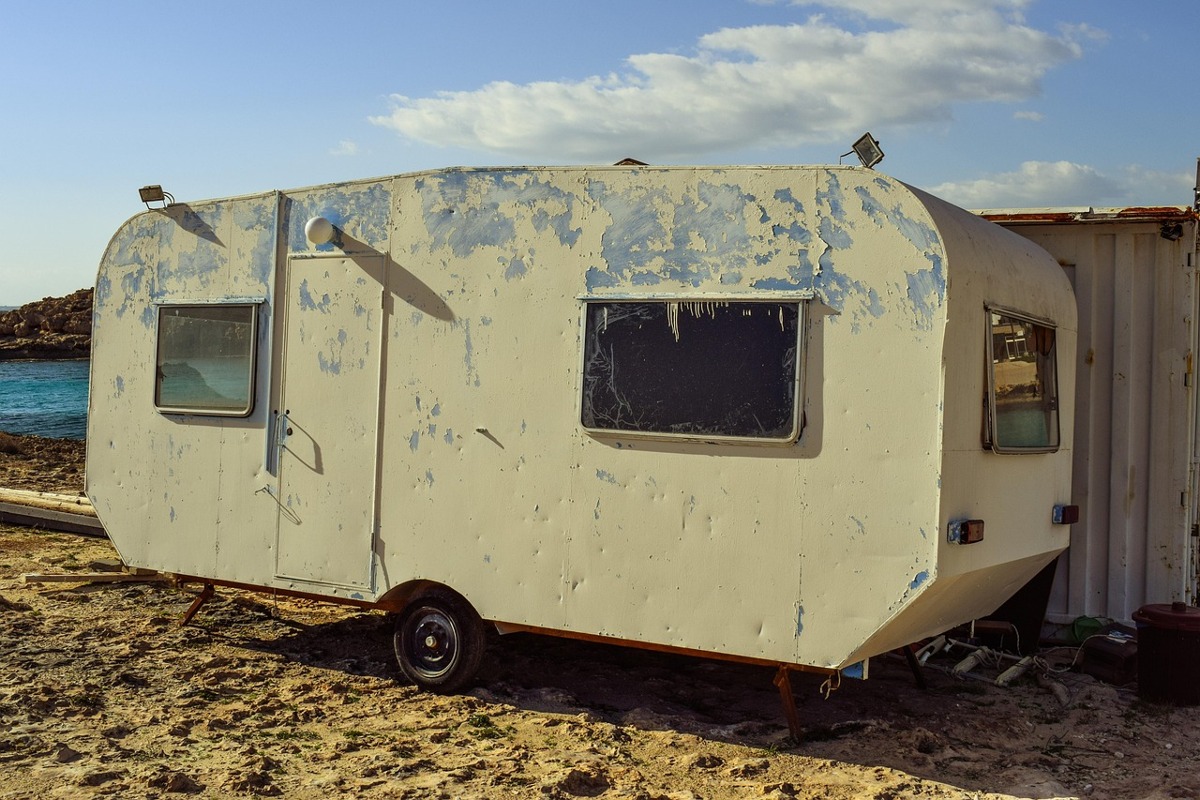
In Jordan, I chose a hotel based on its rating on a review site. It was a mistake.
The hotel wasn’t bad, but I should have paid more attention to reviews that mentioned guests often couldn’t check in at the advertised time. We had paid extra for a room overlooking the Dead Sea, hoping to enjoy the sunset. Unfortunately, we hadn’t even been given our room by the time the sun went down!
I’d chosen this hotel over the one next door because it had higher ratings. Looking back, that was probably a mistake.
A 2025 travel industry study found that more than 70% of respondents wouldn’t book a stay without reading online reviews first. But with so many fake reviews floating around, is it really worth relying on review sites?
The short answer is yes, but you need to know what to look for.
When it all began
Before the internet, choosing a hotel meant browsing holiday brochures, guidebooks or travel agents’ recommendations. You had to take their word for it, with no easy way to hear from people who had actually stayed there.
Then came TripAdvisor, founded in 2000. It initially focused on hotels but soon expanded to restaurants and attractions, giving travellers a way to share their experiences with the world.
Today, Google Maps, Booking.com, Yelp, Expedia and many other sites host a huge number of reviews. We can find out what other travellers think about almost any hotel before we book.
But there’s a catch: how do we know we can trust what we’re reading?
What about fake reviews?
Fake reviews have been a concern almost from the beginning. Back in 2004, authors were caught posting glowing reviews of their own books on Amazon. Soon after, similar practices became a concern in the travel industry.
Hotel owners could write glowing reviews of their own properties, but the problem has since become far more sophisticated. People can now be paid to review hotels they’ve never visited, sometimes without even knowing much about the property beyond what they’ve been told.
These reviews can look perfectly genuine, making them difficult to spot.
And not all misleading reviews are written by people who have been paid. Some are written under pressure.
Pressure reviews

I’ve experienced this myself. A hotel staff member once asked me to write a review and mention him by name, even though I only interacted with him when he pressed the lift button for us.
We’ve also been told that writing a good review would affect a staff member’s performance assessment or wages. Sometimes, we’ve even been told what rating to give.
Other businesses offer discounts in exchange for a high rating. Some tour operators insist that you leave a good review before the tour ends. When you’re standing in the middle of nowhere, you might feel that refusing could leave you stranded by the roadside!
These reviews might come from genuine customers, but how honest can they be when people feel pressured to give five stars?
If you feel that someone has coerced you into writing a positive review on TripAdvisor, you can report it to the platform. TripAdvisor has procedures for handling reviews that breach its guidelines, but the outcome depends on the circumstances.
Why do people write fake reviews?
The answer is fairly obvious: good reviews attract customers.
A hotel with glowing ratings is more likely to win bookings than one with a string of complaints. Some businesses therefore try to artificially boost their scores. Others might arrange fake reviews to push negative comments further down the list.
Competition isn’t the only motivation. Some employees may write reviews praising themselves, hoping their managers will notice and reward them with a promotion.
Interestingly, research suggests fake reviews are overwhelmingly positive. One widely cited estimate puts the figure at 93% of fake reviews being positive. However, negative reviews can disproportionately affect potential customers, especially when they describe something that could ruin a trip.
A single complaint about bedbugs, for example, might be enough to make you look elsewhere, even if hundreds of other guests had a perfectly pleasant stay.
Can you spot a fake review?
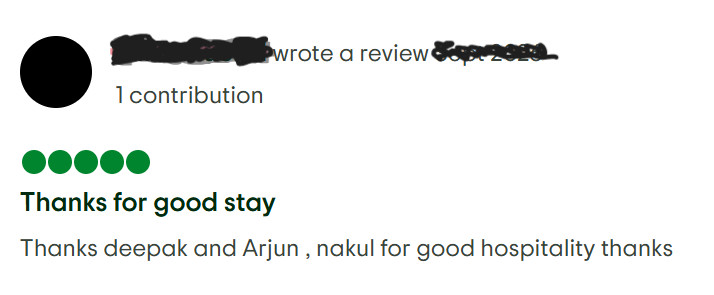
Unfortunately, there’s no foolproof way to identify a fake review just by reading it. However, certain warning signs are worth looking out for, especially when several appear together.
A review might deserve closer inspection if the reviewer:
- Has never reviewed anything else.
- Gives an extremely high or low rating, such as one or five stars.
- Provides very little detail about their experience.
- Uses lots of superlatives, such as “amazing”, “perfect” and “absolutely fantastic”.
- Mentions staff members by name, particularly in glowing reviews.
None of these signs proves that a review is fake. Everyone has a first review, and a genuinely delighted guest might have plenty of praise to share.
But sometimes the pattern is rather suspicious.
I once read reviews of a hotel where around 30 different staff members were mentioned across several reviews, yet no one person was named twice. It made me wonder whether each employee had written a review praising themselves!
Researchers investigating fake reviews have also found differences in language. Fake reviews may use the words “I” and “me” more frequently, explain why the reviewer visited the location, and contain more commas and exclamation marks.
These clues can be interesting, but they aren’t reliable enough to identify a fake review on their own.
There’s another problem: even a genuine review might not give you an accurate picture of a hotel.
I once came across a particularly scathing review that made me reconsider a hotel. Before ruling it out, I looked at the reviewer’s other contributions. They seemed to be unhappy with almost everywhere they went!
That didn’t automatically invalidate their complaint, but it did make me take it with a pinch of salt. We all have different expectations, and what one person considers dreadful, another might barely notice.
What are review sites doing about fake reviews?
Major review platforms know trust is essential to their businesses, so they have introduced measures to detect and remove suspicious content. However, these systems aren’t foolproof.
TripAdvisor
According to its 2025 Transparency Report, TripAdvisor analyses all submitted reviews and uses its own systems to identify potential violations. Most pass automated screening, while some are automatically rejected and others are referred for further human review.
TripAdvisor also prohibits AI-generated review content under its policies against misleading and fraudulent reviews. This matters because AI makes it easier to produce large numbers of convincing-sounding reviews.
The big question is whether these measures can keep pace with the people trying to get around them.
Booking.com
Booking.com has safeguards designed to ensure that reviewers have a genuine connection to a booking.
However, an investigation by consumer organisation Which? demonstrated that these safeguards weren’t foolproof. Researchers created a fake accommodation listing for 10 Downing Street, the UK Prime Minister’s official residence, and submitted a deliberately fabricated 10/10 review of a supposed stay.
The review appeared on the platform almost immediately, despite being referred for moderation.
You can read the full investigation here.
It’s a useful reminder that even established review sites can make mistakes. Their checks can help, but we shouldn’t assume that every published review has been thoroughly verified.
How to use hotel reviews wisely
So, if we can’t always trust the reviews, how should we use them when choosing somewhere to stay?
Over the years, I’ve developed a few habits that have helped me make better decisions.
1. Don’t get too hung up on the overall rating
Don’t assume that the hotel ranked second on TripAdvisor is necessarily better than the one ranked seventh.
A hotel’s position in the search results doesn’t mean it’s the right fit for your trip. Rankings can depend on several factors, and every traveller has different priorities.
Even if we removed every fake review, we’d still have to account for personal preferences. Someone looking for a lively hotel with a pool and entertainment might love a place that someone seeking peace would hate.
I find it more useful to start with hotels that have a good overall rating, perhaps four stars out of five or above, and then investigate the details.
The rating is a starting point, not a final verdict.
2. Don’t believe every complaint
Read enough hotel reviews, and you’ll soon notice that one guest describes the breakfast as dreadful while another calls it wonderful.
Who’s right? Quite possibly, both of them.
Instead of relying on one person’s opinion, look for patterns. If several guests complain about cold food, poor service, or limited breakfast choices, it’s worth paying attention.
You can also search for specific words that matter to you. If you enjoy a proper cooked breakfast, searching for “bacon” or “sausage” might tell you more about what’s available than a general comment about the food.
The same applies to anything important to your stay, whether it’s air conditioning, comfortable beds, reliable Wi-Fi or noise at night.
3. Pay close attention to travellers’ photos

One of my favourite ways to get a feel for a hotel is to look at the photographs uploaded by previous guests.
Management photographs naturally show the property at its best. Rooms are beautifully arranged, lighting is flattering, and even a tiny swimming pool can look Olympic-sized!
Guest photographs can be much more revealing. Some people take pictures that look great on Instagram, but others show the hotel as it really is.
I particularly like checking bathroom photos to see whether windows look directly into the bedroom. It’s one of my pet peeves!
I also check whether there’s a bedside table on each side of the bed. These might seem like minor details, but they can make a room more comfortable.
Of course, not every hotel room is identical, and guest photos won’t tell you everything. But they can give you a much better feel for what to expect.
4. Look for the little details
TripAdvisor’s Popular mentions feature can be surprisingly useful. It highlights things that reviewers frequently mention, helping you discover details that might not be obvious from the hotel’s main description.
You might find out that there’s a free shuttle bus, complimentary afternoon snacks or a particularly useful late check-out arrangement.
We once discovered through a popular mention that a hotel in Stockholm offered very late check-out on Sundays. This was ideal because we had a late Sunday winter flight home. Instead of spending hours looking for somewhere warm to sit, we could stay comfortably at the hotel longer.
It was a small detail, but it made a real difference to our trip.
Once you’ve narrowed your choices to a few good hotels, these little extras often make one stand out from the others.
5. Read the longer reviews, but choose carefully
TripAdvisor lets you sort reviews by ‘detailed review’, making it easier to find longer accounts of people’s experiences.
These can be particularly useful because they often contain practical information that you’d miss in a short comment.
However, longer doesn’t necessarily mean better. Some people use reviews to vent their frustration about things that aren’t really the hotel’s fault.
The last review I read in this category was from a woman who was furious about being charged a large amount for bringing her dog, despite the hotel clearly stating that dogs weren’t allowed.
I’m not sure what she expected!
It’s worth separating a genuine problem from a guest’s unreasonable expectations. At the same time, don’t dismiss every angry reviewer: sometimes people have a perfectly valid reason to complain.
I’ve also found longer reviews that have saved me money and hassle. One reviewer mentioned a bus from the airport that stopped right outside a hotel. I’d normally take a taxi, so that tip was genuinely useful.
Look for practical details, not just emotional reactions.
6. Check the distribution of ratings

TripAdvisor provides a breakdown of ratings, from Excellent to Terrible. This can be useful when you’re deciding between two hotels with similar overall scores.
A quick look can show whether a property has attracted many very poor reviews despite a respectable average rating.
Hotels with lots of excellent and terrible scores deserve a closer look. The mixed results might reflect inconsistent service, differences between rooms or a problem that affects some guests but not others.
For example, we stayed at a hotel in China that received generally good reviews but also had plenty of poor ones. The problem was that some rooms had no windows.
In a crowded city, this wasn’t unusual, but guests who hadn’t realised what they’d booked were understandably disappointed.
We stayed there twice: once for an overnight stop, knowing our room had no window, and later for three days in a room with a window. Both stays were good, and the hotel was excellent value for money.
Without looking beyond the overall rating, we might have missed a perfectly good hotel.
When you see a wide spread of ratings, try to find out why people disagree. The explanation might be a deal-breaker for you, or something you can easily avoid.
7. Pay particular attention to the middle ratings
One useful approach is to spend less time on the very highest and lowest ratings and more time reading the good and average ones.
Extremely positive and extremely negative reviews can sometimes be misleading, whether they’re fake or reflect unusually strong feelings. Middle-rated reviews may offer a more balanced account of what a stay is really like.
Look for comments that explain both the positives and the negatives. These often give you a clearer picture than a simple declaration that a hotel is wonderful or terrible.
Of course, don’t ignore the extreme reviews altogether. If several guests give a hotel the lowest rating because of bedbugs, serious cleanliness problems, or unsafe conditions, you need to investigate.
The aim isn’t to dismiss bad reviews. It’s to understand them in context.
8. Remember that a few bad reviews are normal
Every hotel or restaurant with a reasonable number of reviews is likely to have a few unhappy customers.
Sometimes the complaints are justified. Other times, the reviewer expects something unreasonable.
I’ve seen poor hotel reviews simply because they couldn’t provide late check-out. But if a hotel is fully booked, it can’t necessarily keep a room available for you beyond the agreed time.
If a hotel had absolutely no bad reviews, I’d actually be a little suspicious. Were all the reviews genuine? Or were guests being encouraged to say nice things?
A handful of negative reviews isn’t necessarily a warning sign. What matters is the nature of the complaints and whether the same problems keep appearing.
A hotel with hundreds of reviews and a few minor grumbles might be a safer bet than one with a suspiciously perfect record.
So, are online reviews worth trusting?
Absolutely! But don’t let them decide for you.
Reviews can help you find a hotel with a fantastic breakfast, avoid a windowless room, or discover a free airport shuttle you didn’t know existed. They can also mislead you through fake reviews, unreasonable complaints or simply someone else’s different expectations.
Look for patterns rather than relying on one person’s opinion. Read what people say, look at their photographs and pay attention to the details that matter to you.
Don’t be put off by every negative comment, but don’t ignore repeated complaints about the same problem, either. And remember that a hotel’s overall rating tells you only part of the story.
Most importantly, the highest-rated hotel isn’t necessarily the best hotel for your trip.
I learnt that in Jordan, when I chose a hotel based on its rating, I missed the very sunset I’d paid extra to see.
Since then, I’ve learnt to look beyond the stars.
Leave a Reply