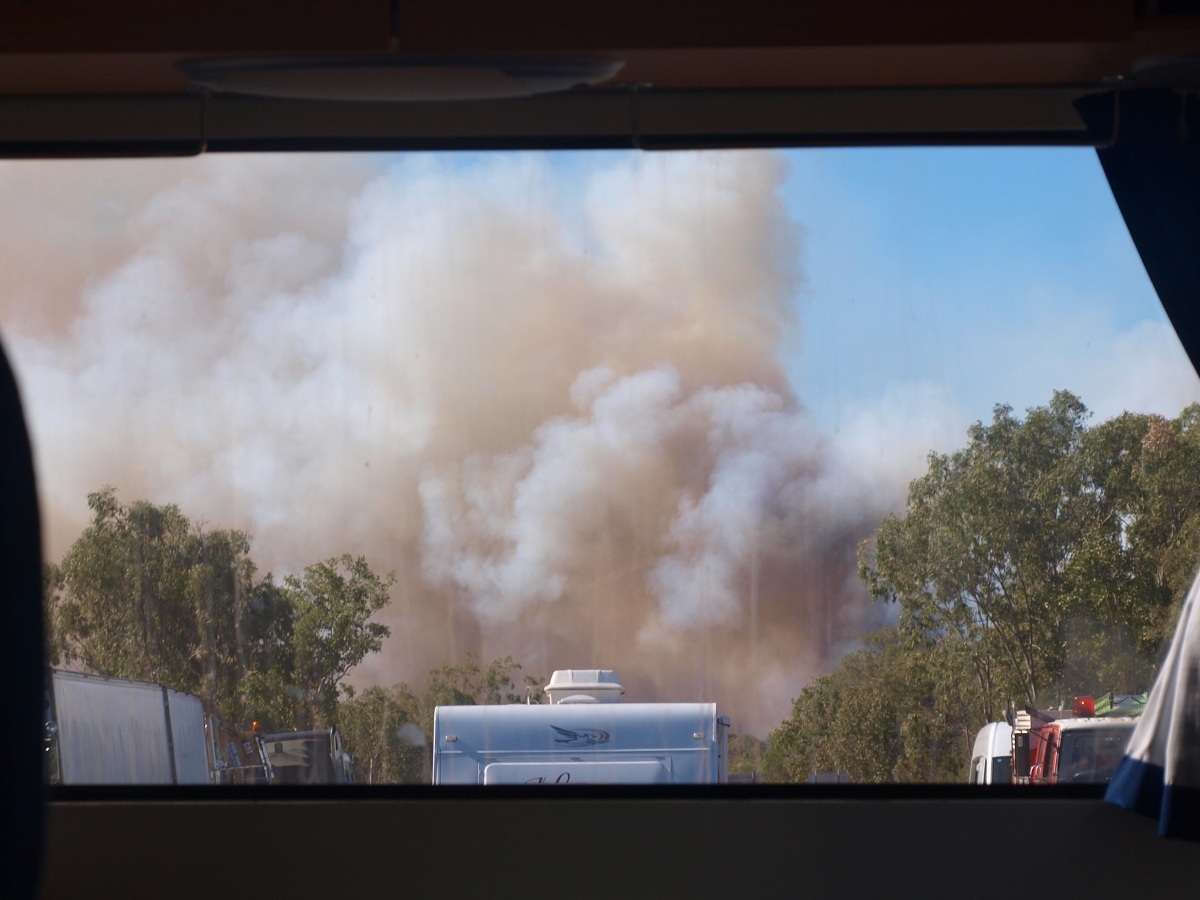
Do you know what to do if an earthquake strikes while you’re on holiday? What about if a hurricane warning is issued, or you hear a tornado siren?
For some people, this is all part of life. For many of us in the UK, however, natural disasters are something we hear about on the news rather than something we ever expect to experience ourselves.
When you travel, the chances of being caught up in a natural disaster are generally small. But what if you discover that your dream Caribbean holiday falls in the middle of hurricane season? Or you wake up in Japan to find your bed trembling?
You probably don’t want to spend your entire holiday worrying about what might happen. Neither do I! But knowing a few basic safety rules can make all the difference if something does go wrong. Most likely, it will give you peace of mind, so if the worst happens, you won’t be clueless.
The good news is that you don’t need to become an expert in natural disasters. You need to know what to look out for, where to go and when to get out of the way.
So, let’s look at some natural disasters you might encounter while travelling, and what to do if you find yourself caught up in one.
Hurricanes: When the weather turns nasty
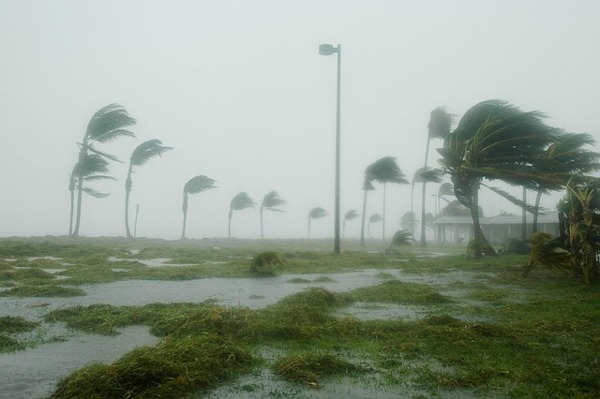
Hurricanes are enormous tropical storms that form over the Atlantic and north-eastern Pacific Oceans. In the western Pacific, similar storms are called typhoons. They can bring devastating winds, torrential rain, flooding and huge waves along the coast.
These aren’t your average British storms. Hurricane-force winds can tear roofs off buildings, uproot trees, and send debris flying. Even if the wind doesn’t reach you directly, flooding and landslides can cause serious problems.
Fortunately, you can usually track hurricanes in advance. Forecasts often give people time to prepare, but storms can change direction or intensity, so never assume you have plenty of time.
If you’re travelling in an area affected by hurricanes, here’s what to do.
Decide whether you need to leave
As a tourist, you may have more flexibility than someone who lives in the area. You might be able to travel inland, move to a different part of the country, or end your holiday early.
However, don’t simply jump in a hire car and head off without a plan. Roads may already be congested, fuel may be running short, and the storm could change direction. Follow official evacuation advice and use the recommended routes.
If you want to fly home early, check that your flight is confirmed before heading to the airport. You don’t want to end up stranded there with thousands of other passengers.
If the authorities order an evacuation, take it seriously. Ask your hotel where you should go and how to get there. It may already have arrangements in place for guests.
Check whether your accommodation is safe
If you’re staying, think about where you are.
A well-built hotel may offer better protection than a mobile home, but location matters too. Is your accommodation on a low-lying coast, beside a river or in an area prone to landslides?
Follow local advice about whether to evacuate or shelter in place. Don’t assume that a hotel is safe simply because it’s a large building.
If you decide to move elsewhere, confirm that your new accommodation is open and can accept you before setting off, provided you have time to do so safely.
Keep up to date

Listen to local radio, watch the news and check official emergency alerts. Your hotel staff may also be able to help, but don’t rely on them as your only source of information.
Remember that electricity and internet connections may stop working during a disaster, so a wind-up or battery-powered radio can be useful.
Stock up on essentials

If officials advise you to shelter in place, gather what you need while it’s still safe.
Prioritise food, drinking water, and any essential medication. Keep your phone charged and charge any power banks you have. A torch is much more useful than stumbling around in the dark with a low phone battery.
You may also lose electricity, running water and access to shops for several days, sometimes longer. Follow local advice about storing water safely, and don’t assume that tap water will remain drinkable.
Pack a bag in case you need to leave
Keep your passport, medication, money, bank cards, phone charger and a change of clothes together in one easy-to-carry bag.
You don’t want to rummage through your suitcase for your passport when everyone else is heading for the exit!
If you need to evacuate to a shelter, space may be limited, so take only essentials. Check whether the shelter has any rules about the amount of luggage or other items such as alcohol.
When the hurricane arrives, stay away from windows
If you are told to shelter inside, move to an interior room away from windows and exterior doors. Keep away from glass and anything that could fall on you.
Don’t be tempted to go outside just because the wind suddenly drops. Hurricanes can have a relatively calm period known as the eye, followed by another round of dangerous winds.
Wait until the authorities say it’s safe to leave your shelter.
Tornadoes: Don’t wait around to see what happens
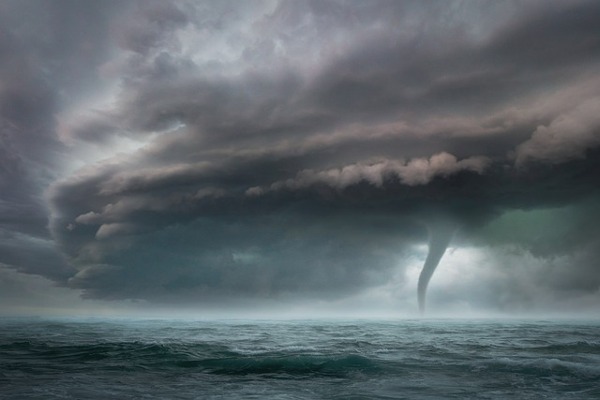
Tornadoes are violently rotating columns of air that extend from thunderstorms to the ground. Unlike hurricanes, which can affect enormous areas for days, tornadoes tend to affect much smaller areas and may develop with very little warning.
They can nevertheless be incredibly destructive. Powerful winds can damage buildings, overturn vehicles and turn everyday objects into dangerous flying debris.
In the UK, we do get tornadoes, but they are generally small and weak. My only experience was paper plates spinning at a fete.
In parts of the USA, particularly areas where tornadoes are common, warning sirens and weather alerts help people know when to take shelter.
Before I travelled to Tornado Valley, I downloaded a tornado warning app. I am not sure how useful it was because I enjoyed our trip so much that I completely forgot to look at it. Hopefully, I would have noticed if an alert had come in.
If you hear a tornado siren, don’t stand outside trying to work out whether you can see anything. Get to safety immediately.
How do you know if a tornado is coming?
Possible warning signs include:
- Large hailstones.
- A dark or greenish sky.
- Large, low-lying clouds.
- A rotating, funnel-shaped cloud.
- Debris being lifted into the air.
- A loud roar, sometimes compared to a freight train.
However, you may not see any of these signs before a tornado arrives. Always take official warnings seriously.
Where should you shelter?
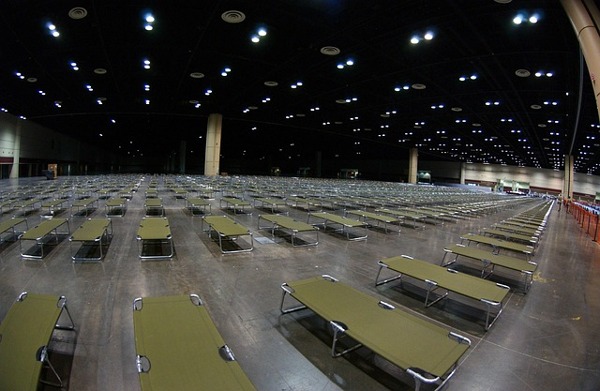
A designated tornado shelter is ideal. Otherwise, find a sturdy building and go to its lowest floor. Long buildings, such as shopping centres, are not a good choice, as the roof is often attached only to an outside wall and is vulnerable to collapse.
A basement is usually a good option. If there isn’t one, find a small internal room, cupboard or corridor with no windows. A bathroom may work if it is away from exterior walls.
The aim is to put as many walls as possible between you and the outside. If you can, get under sturdy furniture and use a mattress, cushions, or a thick blanket to protect your head and neck.
Don’t open the windows to equalise the pressure. This is a myth and wastes valuable time.
If you’re staying in a hotel, ask staff where the designated shelter area is. A windowless internal corridor may be a good option, but follow the building’s emergency instructions.
What if you’re in a car?
Your safest option is to reach a sturdy building immediately.
If a tornado is nearby, you are unlikely to be able to outrun it.
Never shelter beneath a bridge or motorway overpass, as these offer little protection and can expose you to dangerous winds and flying debris.
Seek shelter in a building or where the ground is lower. Keep away from vehicles or other hazards. Get as low as possible and cover your head and neck.
However, ditches can be dangerous in heavy rains.
If you are caught in your car with no warning, keep your seat belt on, try to get below your window, and use anything you can find to protect your head. This is an extremely dangerous situation and should be avoided at all costs.
Earthquakes: When the ground starts moving
Earthquakes can be particularly frightening because they often happen without warning.
I have visited Japan, where earthquakes are a part of life, and it’s worth remembering that not every earthquake causes serious damage. Many are small, and countries that experience them regularly often have systems and building standards designed to reduce the risks.
Nevertheless, it’s important to know what to do if the ground starts shaking.
Remember three words: Drop, Cover, Hold On
If you’re indoors:
- Drop to your hands and knees before the shaking knocks you over.
- Cover your head and neck and, if possible, shelter under a sturdy table or desk.
- Hold on until the shaking stops.
If there’s no suitable table, get down near an interior wall, away from windows and objects that could fall. Protect your head and neck with your arms.
Don’t run outside or rush into another room while the building is shaking. Falling glass, masonry and other debris can make this more dangerous than staying put.
If you’re in bed, stay there and cover your head with a pillow, unless something dangerous is likely to fall on you.
If you’re staying in a hotel, don’t use the lift during or immediately after an earthquake.
What if you’re outside?
Move into an open area away from buildings, walls, trees, streetlights and power lines if you can do so safely. Stay there until the shaking stops.
If you’re driving, pull over somewhere safe, away from bridges, buildings and power lines, and remain in the vehicle until the shaking ends.
Tsunamis: Get away from the coast
Tsunamis are often described as giant waves, but they are better understood as a series of powerful waves and surges caused by the displacement of a huge volume of water. Underwater earthquakes are a common cause, although volcanic activity and landslides can also trigger them.
Some tsunamis cause little damage, while others can flood large areas of coastline and sweep away buildings, vehicles and people.
Warning systems operate in many parts of the world, but if an earthquake happens close to the coast, there may be very little time to react.
Know the natural warning signs
If you’re near the coast and experience a strong or prolonged earthquake, a tsunami may follow.
Once the shaking has stopped and you can move safely, head inland or to higher ground immediately. Don’t wait for an official warning if the earthquake is strong or long enough; the earthquake itself is a natural warning. However, not every coastal earthquake produces a tsunami.
If you’re near the sea and notice the water suddenly receding or rising unusually, or hear a roar from the ocean, don’t wait to see what happens next.
Move away from the coast and head for higher ground immediately.
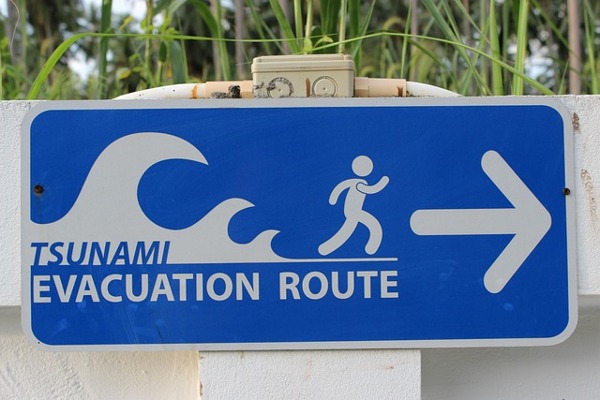
Follow marked evacuation routes if they are available. If you can walk to safety, that may be better than driving, as roads can quickly become congested.
What if you can’t get inland?
If you cannot reach higher ground, a sturdy, tall building may be your next option. Move to the highest level you can safely reach and follow any official instructions.
Tsunamis can be powerful enough to damage or destroy buildings, so this is a last resort, not a guarantee of safety.
Keep away from rivers, streams and other waterways that connect to the sea, as tsunami surges can travel inland along them.
If you reach safety, stay there. The first wave may not be the largest, and dangerous currents can continue for hours or even days. Don’t return to the beach to take photographs or have a look.
Large, destructive tsunamis are relatively uncommon for most tourists, but if you’re visiting a coastal area at risk, it’s worth knowing the evacuation route before you need it.
Forest fires and wildfires: Don’t hang around
Wildfires can be frightening because they spread quickly, especially in hot, dry, windy conditions. Smoke may be visible long before the fire reaches you, but don’t assume that means you have plenty of time.
Coming from the UK, I initially found it strange that people didn’t immediately leave an area at the first sign of smoke. Then we went on holiday to Australia and came across several bushfires.
I began to understand that fire is a familiar part of life in some places, and not every fire is an immediate threat. Some are deliberately started and carefully managed to reduce the risk of larger fires.
However, a controlled burn and a wildfire spreading out of control are very different. As a visitor, you may not know which you’re looking at, so take official advice seriously.
A tourist’s advantage
One advantage of being a tourist is that you probably don’t have a house or garden to protect. You don’t need to stay behind to save your belongings.
Locals may know the area’s fire conditions, but don’t assume a fire is safe just because people nearby seem relaxed.
If you see or hear about a wildfire, check official alerts and leave the affected area promptly if instructed. If you spot an unreported fire, contact local emergency services once you’re somewhere safe.
Don’t wait until the smoke is thick or the flames are close before deciding to leave.
Our Australian bushfire encounter
When we were in Australia, we came across a fire that wasn’t part of a controlled burn. Fire crews were trying to bring it under control. We were diverted, got lost, and had to drive past the fire again; we felt the heat, smelled the smoke, and could feel it in our throats.
My children all wanted me to stop the vehicle so they could take photographs!
I can understand the temptation. When you’re on holiday, you want to capture an unusual sight like that. But this wasn’t the time to stop for a photo.
I carried on driving and only slowed down once we were well away from the fire.
It’s a useful reminder that you don’t need to get close to a dangerous situation to have a good holiday photograph. Sometimes the best decision is to keep going.
What if a wildfire is approaching?
Follow evacuation instructions immediately and use the routes authorities recommend. Don’t drive towards the fire to see what’s happening, and don’t stop to take photographs.
If you are on foot, get away from the fire and smoke as quickly as you can. Don’t try to tackle the fire yourself.
If you’re in a vehicle, don’t assume driving through the flames is safe. If you cannot escape, contact emergency services if possible and follow their directions.
If you are trapped outdoors, your options may be limited, and conditions can change rapidly. There is no single sheltering technique that is safe in every wildfire. You may have heard about people surviving by hiding in a pool. These stories make the news because they so rarely end well.
Seek the safest available location, get away from vegetation and flames if possible, protect your breathing from smoke and follow emergency advice.
The most important thing to remember is that leaving early is usually much safer than waiting until the fire is on your doorstep.
After a natural disaster: The danger may not be over
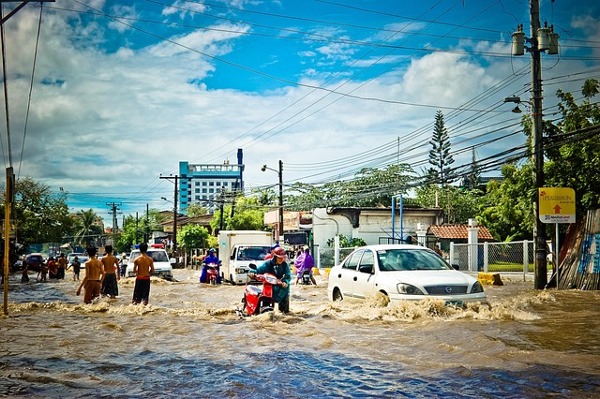
Surviving the initial disaster is only part of the story. The aftermath can bring its own hazards, particularly if you’re somewhere unfamiliar.
Buildings may be damaged, roads may be blocked, power lines may be down, and water supplies may be contaminated. Floodwater can contain sewage, chemicals, sharp objects and electrical hazards, so avoid walking or driving through it.
Don’t assume tap water is safe to drink. Follow local advice and use bottled or otherwise approved safe drinking water until the authorities confirm the supply is safe.
Be careful around damaged buildings, too. They may look fine from the outside but could be structurally unsafe, particularly if aftershocks are possible.
Should you leave the country?
If a disaster seriously affects the area you’re visiting, it’s understandable that your first thought may be to get home as quickly as possible.
However, leaving the country immediately isn’t always possible or the safest option. Airports may be closed, roads impassable, and transport services overwhelmed.
Start by following local emergency advice and contacting your hotel, airline, tour operator and travel insurer. Your Foreign Office can also provide advice and information for nationals affected by a crisis overseas.
If flights are operating and it’s safe to travel, returning home may be your best option. If not, you may need to remain in a safe location until transport becomes available.
Unless you have the relevant professional skills and are part of an organised response, avoid entering disaster zones to help. Emergency services need to prioritise people in immediate danger, and untrained volunteers can unintentionally make their work harder.
Above all, look after yourself, follow instructions, and don’t take unnecessary risks to get home a few hours sooner.
So, should you avoid travelling to places prone to natural disasters?
I’ve visited places such as Japan, where earthquakes are relatively common, and travelled to Tornado Alley in the USA during peak tornado season. Thankfully, nothing serious happened to us.
That doesn’t mean there is no risk. It simply means that visiting a place where natural disasters occur doesn’t automatically mean something bad will happen to you.
In fact, some of these destinations are well prepared. They may have warning systems, designated shelters, emergency procedures and buildings designed to cope with particular hazards.
Of course, you can never guarantee that a holiday will be completely safe. It’s worth checking the risks before you go, making sure you have appropriate travel insurance and knowing where to find reliable local advice.
Japan, for example, faces a significant long-term earthquake risk. That is an important issue for the people who live there, but it doesn’t mean that tourists should automatically rule out a visit. It’s a fascinating country, and I’d happily return.
The same principle applies elsewhere. A hurricane season, the possibility of a tornado or the risk of a wildfire doesn’t necessarily mean you should cancel your travel plans. It means you should understand the risks and know what to do if something happens.
After all, risks exist everywhere, even at home. People have been known to die falling out of bed, so nowhere is completely safe.
My advice? Learn the basics, pay attention to local warnings, and take sensible precautions. Then stop worrying about everything that might go wrong and enjoy your holiday!
Leave a Reply