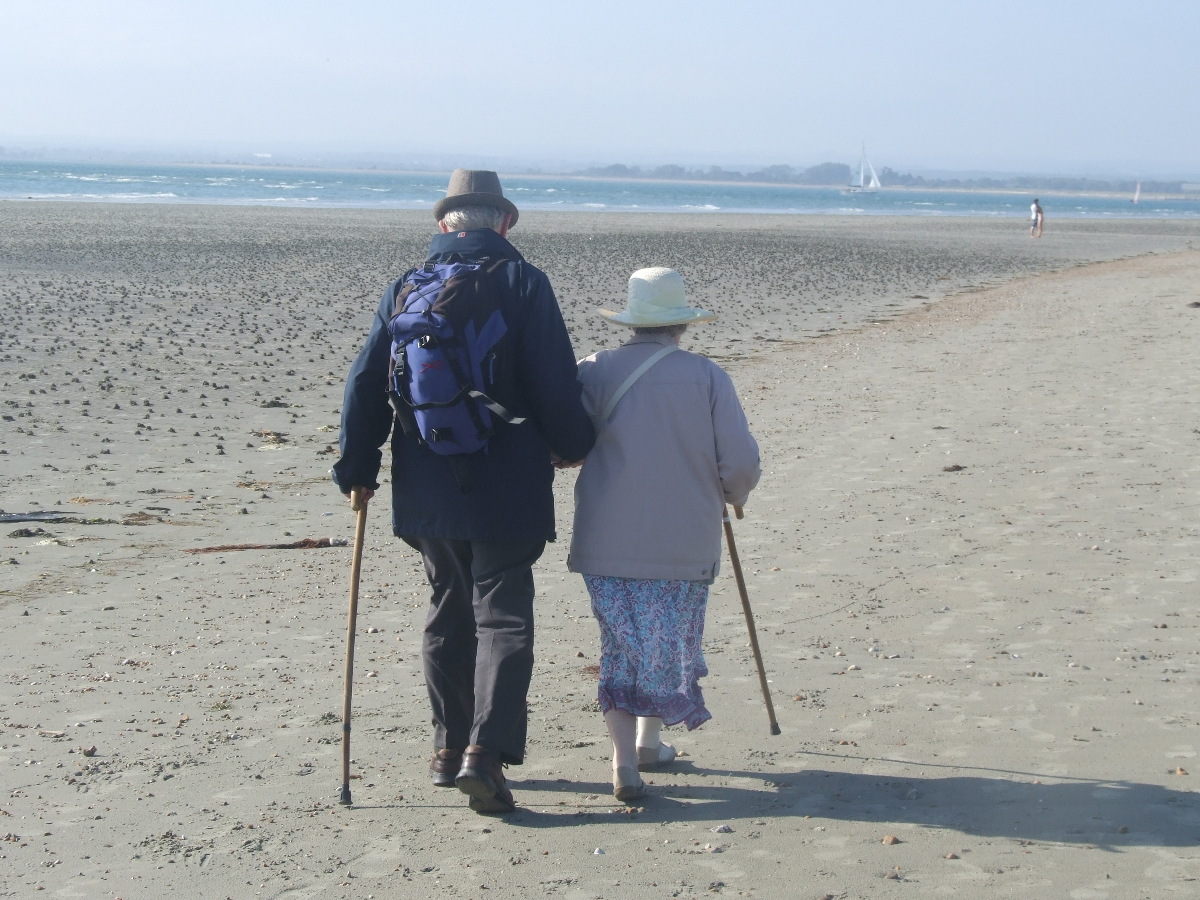
As you get older, suitcases get heavier, aeroplane steps get higher, and the walk to the gate at the airport seems like a long-distance race. They don’t even serve a good cup of tea halfway along the trek.
Then, while you are sitting by the gate, half the people disappear. They have all been notified by an app that the gate has changed, and by the time they make a public announcement, all the seats by the new gate are full.
Plane travel becomes more tiring as you get older, and many find they are less able to cope with the physical demands and stress, but there are ways to make it a more pleasant experience. Unfortunately, most of the things you can do cost extra money, but it might be worth it if you arrive without needing a week of bed rest to recover.
Booking the flight
The time your flight leaves is important for getting your holiday started on the right track.
Some older people don’t sleep well, so getting up early is no problem. Others, like my parents, who used to get up at 5 am every morning, now find it hard to make a doctor’s appointment before 10 am. Try to book a flight that lets you get up at your normal time. Early flights might be cheaper, but they add stress and tiredness if you have to get up earlier than usual.
Remember to get to the airport 3 hours before the flight, plus allow enough time to get there.
If you have a choice of getting up early or going to bed late when you arrive. Choose to get up early if you are a morning person, and go to bed late if you are an evening person.
Flight times can change after you book. The later you book a flight, the less likely it is to change, but the price may be higher, or the flight may be full.
Getting to the airport
It’s best not to arrive at the airport already exhausted, so choose a method of transport that is easy both physically and mentally. A taxi is the easiest method, but it is not always possible. It might, however, be worth just finding out how much it will cost before you dismiss this option.
If you travel by train or on a transport system such as the London Underground, check which stations are wheelchair-friendly. On the London underground maps, you can find wheelchair symbols. Wheelchair-friendly stations mean you don’t have to carry your suitcase upstairs. We find the journey across London much easier when we don’t have to carry suitcases up the stairs.
Hotel near the airport
Consider booking a hotel near the airport. When you were working, you had limited spare time, but in retirement, you can use it to your advantage. If the journey to the airport is long or tiresome, why not book a hotel near the airport? If possible, plan your journey so you arrive early, ideally near the hotel’s check-in time. You can then recover, relax, read or watch TV before your journey the next day.
Sometimes, if you have an early flight, you can drop your suitcase off in the evening before your flight. If you do this, you will need to take an overnight bag, but I manage to take very little. I take the disposable toothbrushes, toothpaste, and combs you sometimes get for free at hotels, then throw them away after using them.
Hotels closer to the airport tend to be more expensive, but it’s lovely when a hotel is attached to the airport, so after breakfast, you can stroll into the terminal. If the airport isn’t right next to the terminal, check how you will get there, and if your hotel has a shuttle, check its price. Some hotels call themselves airport hotels, yet they are a long way from the airport.
Reduce what you take
If you didn’t have to take your suitcases, travelling would be much easier.
When my in-laws were in their 80’s, they travelled from the UK to see their daughter in Canada. They managed to reduce what they took down to two small, hand-luggage-sized suitcases. They did this by asking their daughter what they could borrow when they were there. She has spare gloves, coats, jumpers, a hairbrush, etc. This means my in-laws could pack less.
If you are not visiting family, you could consider taking some old clothes or shoes you would be happy to throw away before you return home. Anything that will lighten your suitcase can help.
Have a look at everything you decide to pack. Do you need to take it all? Before, you might have put things in your suitcase just in case you needed them, but now you should be thinking, is this item worth the extra weight? Or if I need it, can I buy it easily when on holiday?
Check all the items you are taking and see if you have lighter versions. Pack your suitcase with the heaviest items near the wheels.
Luggage delivery
You could arrange for your luggage to be collected from your doorstep and transported to your destination. Several companies do this. Some people have found it cheaper to send their suitcase through a luggage shipping service than to pay for the airline’s baggage allowance. Get lots of quotes, but make sure the company has a good reputation and isn’t a fake.
Don’t put anything valuable in your suitcase, and don’t put your medicines in it; take them as hand luggage. If you find the quotes a bit expensive, consider just sending one suitcase if there are two of you. Put all the heavy things in that suitcase and fill it up to the limit. Then split the remaining lighter clothes into two smaller bags.
Using a luggage collection service means you don’t have to wheel your suitcase to and from the airport, and you also don’t need to collect it from the carousel, which some older people find difficult.
Type of luggage
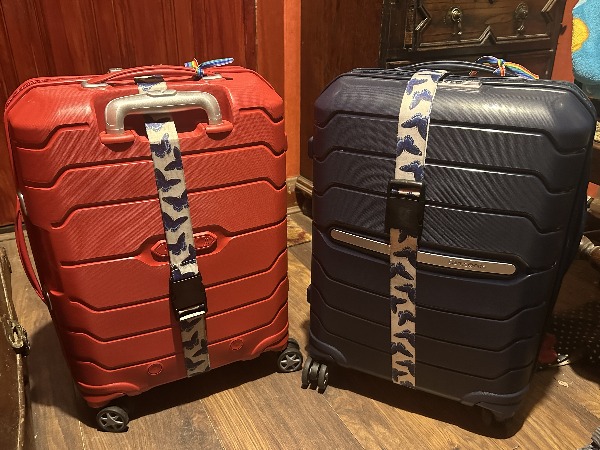
Consider which bags might be easiest for you to take. If you have a walking stick, you might find a backpack easier to use for hand luggage.
If you haven’t bought a new suitcase for a long time, see what is now for sale. Suitcases are improving all the time, becoming lighter and easier to roll.
Don’t buy a canvas suitcase unless you need it, because it takes up less space when empty. Canvas bags tend to fall over, and it’s harder to keep them upright when things start to shift around inside.
You can get suitcases with chairs attached, but they make the bag heavier and aren’t necessary, since you can usually check your suitcase in early.
Porter service
Some airports offer a porter service, where they will place your suitcases on a trolley and push it to the check-in desk for you. At Heathrow, this service costs £35 per trolley and operates from 6 am to 9 pm. You don’t need to pre-book unless you are a large party. If you want to use this service, look out for a high-vis jacket with the word porter on it.
This might solve your problem at the airport if suitcases are too heavy for you to lift, but you may still have to lift them when you arrive at your destination.
Meet and Greet

You might want to consider booking a meet-and-greet service. This is when someone will escort you through the airport, through check-in, customs and passport control. This service can be very expensive; at Heathrow, prices start at £325. You can use this service when arriving, departing or connecting to another plane. They won’t carry any heavy bags but will show you where to go.
In Cuba, we had to queue multiple times when leaving the country, and it took hours to complete the required procedures before we could reach the gate. While I was queuing, I watched a family who had booked a greet-and-meet service go straight to the front of an hour-long queue and to a special passport station. They don’t jump the queues in Heathrow, but they do in some countries.
If the airport stress is stopping you from visiting a child who has emigrated, then the extra cost might be worth it.
Fast track
It is possible to pay to fast-track security. At Heathrow Airport, it costs £12.99. This service is only really worth it at peak times, such as the beginning of school holidays. You need to book it in advance. It is the same as standard security, but they limit the number of people who can use it.
If you think you will find security too challenging, you could use the special-needs entrance. Not every airport has a separate line, but if it does, it is for those with disabilities or children, who take longer at security. There is no point using it if you think the queues are shorter. The lines can be shorter, but the people take longer to go through because they have special requirements and sometimes wheelchairs, which need to be checked.
Special assistance
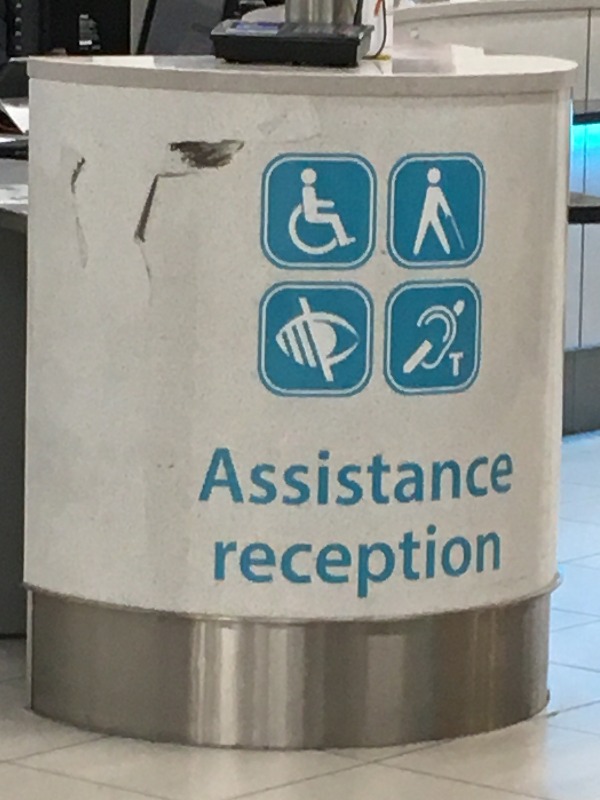
If you can’t walk far or have other medical issues, you might want to consider using special assistance; they can provide a wheelchair or take you in an electric buggy. Note that the longest walk from the entrance to the gate is at Beijing Capital International Airport Terminal 3, which is 2 miles. At Gatwick’s north terminal, it is 1.12 miles to its furthest gate, and Heathrow Terminal 5 is 0.75 miles. There are usually moving walkways to help you with this walk, but some people with mobility problems find getting on and off these walkways difficult and stressful.
You might not feel you need special assistance at your local airport, but consider whether you might need it if you have to catch a connecting flight. On one trip, our plane was an hour late, and we had to run to the new flight gate, which was in a different building. If one of our group hadn’t received special assistance, they would never have made it.
You should book special assistance in advance, if you can. It is a free service and can make life easier. You book it for the whole journey, not just one part. You don’t have to prove you need it; it is there for those who need help.
What time should I leave home?
For international flights, you should arrive at the airport 3 hours beforehand. UK passengers are often told that two hours for a European flight is enough. The procedures for long-haul and short-haul overseas flights are pretty much the same. The only difference is that long-haul flights usually carry more passengers and may open and close the gate earlier. Also, there are more European flights per day, so if you miss one, you will not have to wait as long for the next. I would advise passengers to arrive 3 hours before all international flights and 2 hours before domestic flights to ensure a stress-free journey.
It is best to get to the airport early. There are usually shorter queues and therefore less standing, and you might find on your return journey that the airport doesn’t have enough seats for everyone.
When you are younger, rushing everywhere is part of life, but now that you have more time, you can arrive early and enjoy a rest at the café before boarding.
Boarding the plane
You are allowed to bring walking sticks onto a plane, and they do not count toward your personal luggage allowance. You will, however, need to put the walking stick under your seat or in the luggage compartment above the seats. A fold-up walking stick might be the best option; it isn’t too big, and you can store it in the pocket in front of you, ready for use if you need to leave your seat.
If you are putting heavy luggage in the storage bins above your seats, the aircrew are not expected to help you. The rule is that if you can’t lift the bag yourself, you shouldn’t bring it on board; check it in instead. In reality, most aircrew will help, although it is not part of their job. It is probably better to ask the first strong-looking passenger who walks past; they are usually more than willing to help.
Upgrade your seat
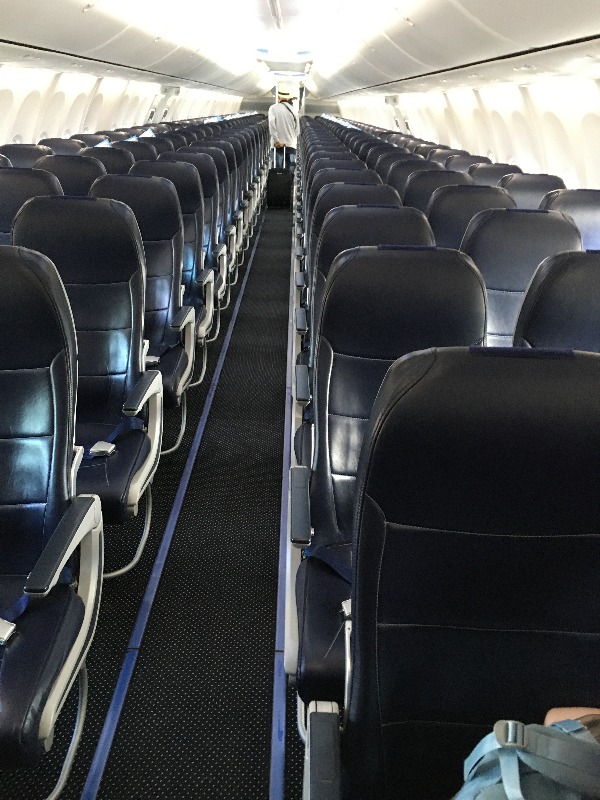
As you get older, plane seats become more uncomfortable. You might need more room to stretch your legs. You might find it challenging to manoeuvre sideways out of a window seat, and the seats make your back ache. Aeroplane seats are nothing like your favourite chair at home.
If you upgrade your seat, you will obviously get slightly more comfort; the more you pay, the more comfort you get. If you pay for business class, you might be able to lie flat for extended overnight trips. However, in my experience, many older people find it relatively easy to fall asleep sitting up in a chair.
You may never have thought an upgrade was worth it, but it might be time to consider one if you have medical problems, such as a bad back.
Note, if you book a seat with extra legroom and are physically limited, choose one near the bulkhead, not the doors. The people seated near the doors have to appear able to operate the doors in an emergency.
Special meals
On some airlines, you can arrange special meals. I have found Emirates to be especially good at this. For example, if you have high blood pressure, you can order a low salt meal.
If you fly with an airline from a different continent, you might find the food varies a lot from what you are used to. None of our parents would be able to cope with the food served on Air China, as it would be too spicy. Either bring your own food or order a special meal. Some airlines serve a bland meal. They are for those with gastrointestinal discomfort and won’t contain any spicy ingredients.
You can order any of the meals; you don’t have to be a Hindu to order that choice.
Go at a slower pace
Once you retire, you learn to take things more slowly. You don’t need to rush around all the time. While younger people might be stronger and many take travelling by plane in their stride, if you go at your own pace, you will be fine.
When the plane lands at its destination, most people grab their belongings and rush through the corridors to passport control. They all rush and get stressed out.
One time, when we arrived at Gatwick Airport, one of our children felt ill and spent a long time in the bathroom. When we got to the vast passport control room with its multiple queues, it was empty. We could walk straight up to any of the passport control officers.
Arrange an airport taxi
If you don’t have anyone meeting you at the airport on arrival, I suggest you book a taxi. There are usually taxis waiting at airports, but then you have to queue, explain to the driver where you want to go, have the right money, as they often don’t have the right change, and hope they aren’t scamming you by taking you on a long route. I once had a taxi driver who couldn’t speak English and couldn’t read the local language because he didn’t have his glasses.
Having a meet-and-greet taxi driver meet you at the exit of the arrivals hall is a little more expensive but worth it after an exhausting journey.
If you look online at the arrival airport’s website, you’ll often find a list of taxis you can prebook. Otherwise, try websites like Booking.com.
You often have to provide your flight details so they can determine when to meet you.
If you have requested special assistance or think you might be a bit slow getting through the arrival procedures, make sure your driver is aware you might take longer than a typical passenger. Drivers typically wait 1 hour, but they might arrive a bit later if they know you might take longer to arrive.
Medicines

The one thing you shouldn’t reduce taking is your medicines. Do take a few spare items in case you are delayed returning. Take a copy of the list of any medication you take; this could be a copy of your prescription. You can then show this to customs if they request it, or to a doctor if you need more, because you accidentally knocked your bottle into the sink and half the pills went down the plughole.
Do check that all your medicines are allowed in the country you are entering, as some medications that are common in your country may be illegal in others.
You can reduce the space you need for tablets by only taking what you need and folding the paper tablet boxes down. Do not put your tablets in a pillbox or other containers, as they must be packed as provided by the chemist to get through customs. Sometimes chemists can provide smaller bottles for liquid medicines, but they must have a proper, official printed label.
Summary
As people get older, they still want to travel to other countries, maybe for the sun or to see relatives, but the travelling part becomes harder. Most of the ways to make the journey easier cost extra money: don’t think of it as a luxury but an investment in your health.
By making your journey as easy as possible, you will recover more quickly. You don’t need to book first-class seats, but by removing the most physically or mentally challenging parts of your journey, you might even enjoy it.
Everyone can feel exhausted after a plane journey, but a few simple things, like having your luggage sent to your hotel, can make a huge difference.
If you think you might need special assistance, you could look at this blog
I hope you have a comfortable and relaxing journey and enjoy your holiday when you arrive.
Leave a Reply