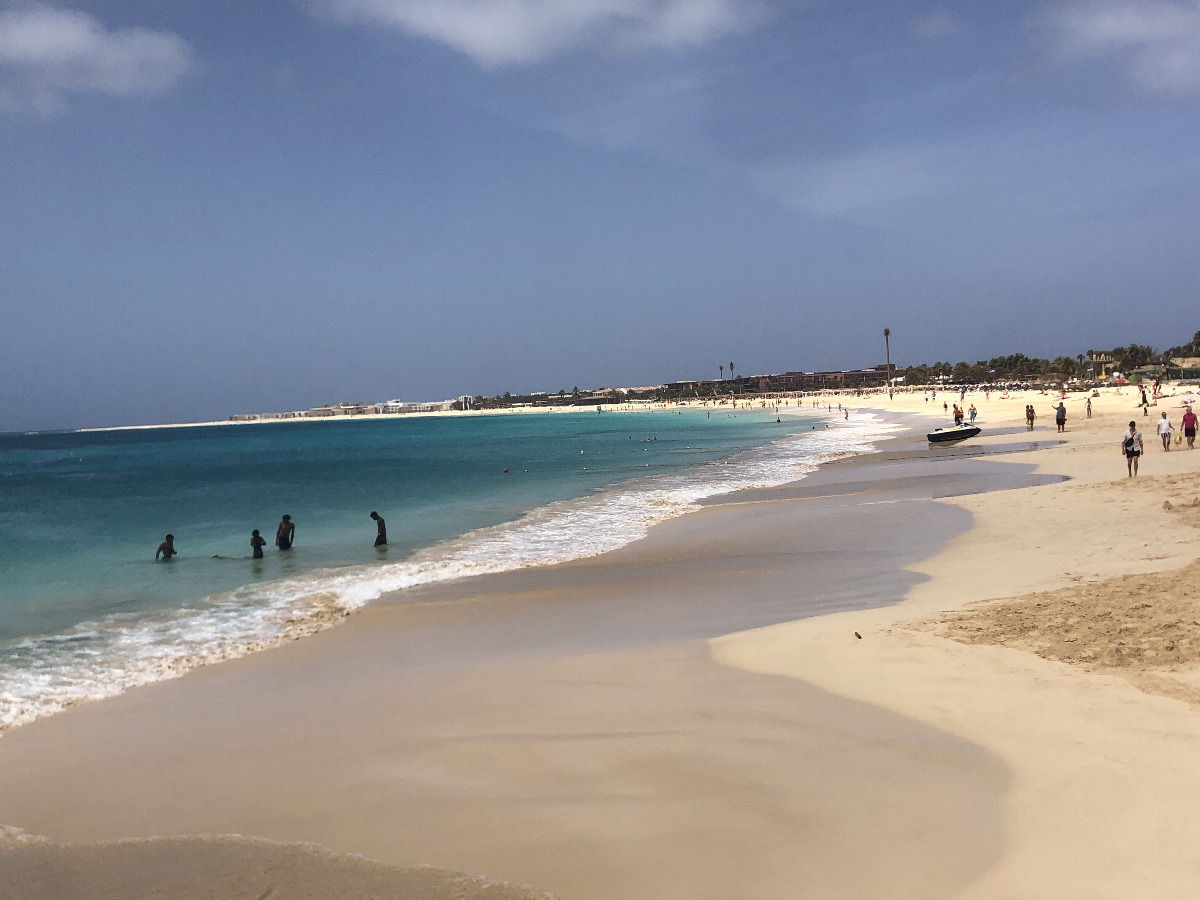
Cape Verde, officially the Republic of Cape Verde, is a country off the West coast of Africa, comprising 10 volcanic islands. It has beautiful sandy beaches, crystal-clear waters, and a laid-back lifestyle. Perfect if all you want is to relax.
Until a couple of years ago, I knew nothing about it. Probably because it isn’t the type of holiday I usually take, I like to move around and explore, not sit down by the pool.
A few days after Christmas one year, my daughter asked if we could go on a beach holiday where we could spend time around a pool. I was tired after having so many people over at Christmas, and the idea of doing very little appealed to me. I thought I would give Cape Verde a try. I might even find I enjoy fly-and-flop holidays.
Which island to visit?
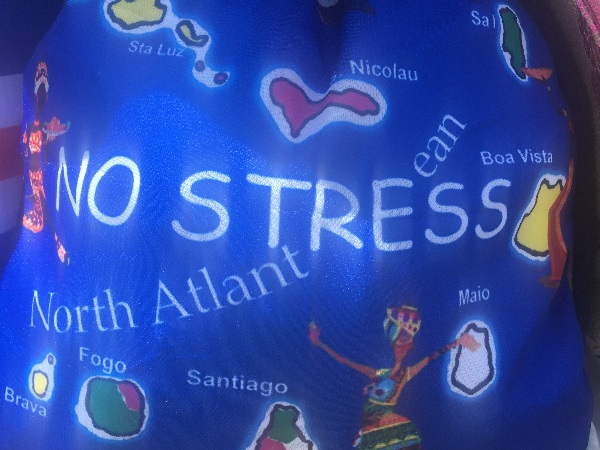
Cape Verde is ideal if you are after a relaxing, no-stress holiday and sunshine. There are not many tourist attractions, but it’s perfect if you want to enjoy nature or chill by the pool.
There are 10 main islands, but most tourists visit Sal or Boa Vista.
Boa Vista is the quieter of the two islands. With over 34 miles (55 km) of sandy beach, you will have no trouble finding an empty beach. The centre of the island is barren and rocky. There are very few trees except for a few date trees, from which some of the locals make a living. If you like wild, expansive beaches to walk along with rolling surf, this is the place for you.
Sal is the most popular of the Cape Verde islands. It also has long golden beaches. Inland, it is barren and rocky. Sal is more developed, with a wider range of hotels and guest houses and a larger selection of restaurants. Don’t worry, it is still a very chilled and laid-back place. If you want to swim in the sea, choose Sal, as it has more sheltered beaches, calmer waters, and weaker currents.
The other islands are just as lovely, but some are harder to reach directly and less geared toward tourists. São Vicente is an island alive with music. Santa Luzia is uninhabited. Santiago is the largest island and home to the capital, Praia. This is a good island to stay at if you plan to do a lot of island hopping.
Independent or as a package?
99% of the time, I travel independently, but sometimes, if you are staying at one location, it can be cheaper to go with a package company. This was true in Cape Verde, where TUI operates direct flights from the UK. I did a quick calculation, and it worked out cheaper to take a package holiday.
Fully inclusive or not?
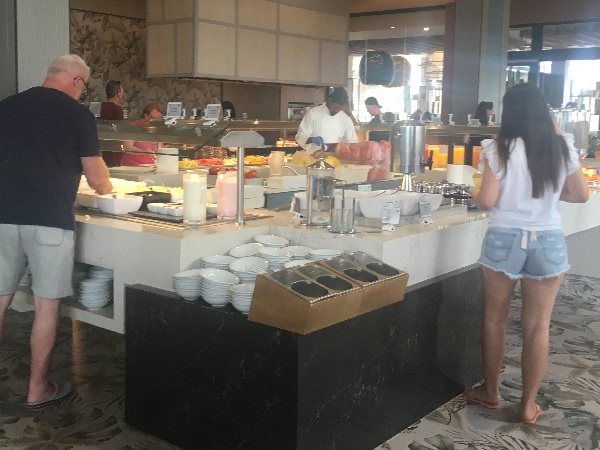
Being fully inclusive is a good way to stay within a budget, especially if you have a family. I, however, am not a fan of fully inclusive hotels. It is so easy to spend all your time at the hotel and not see the country you are in or mix with any locals beyond the hotel staff.
In Cape Verde, I decided that a fully inclusive option was the best for us. Mainly because there weren’t any local restaurants near the hotel. We did, however, plan and book excursions independently to support local communities.
It is worth checking whether there are any local restaurants before making your decision, as Cape Verde has fewer facilities than many other tourist destinations.
When to go?
The sunshine is what makes Cape Verde so attractive, especially after a wet, miserable winter. It has a tropical climate year-round, with daytime highs of 24-30 °C (75-86 °F).
The best time to go is from November to June. This is when there is less rain. April or May are the driest months, with fewer tourists, except if Easter is in April. In May, the humidity starts to rise.
If you plan to travel during the school holidays, note that August is the wettest month, with 13.75 mm of rain. That isn’t much, but it will interrupt your sunbathing.
Wind is another consideration: it’s strongest from December to March, making it the best time for kite and windsurfing. The sea can be a bit choppy, but the breeze can help keep the temperatures pleasant.
What to do?
Spending time lazing by the pool is probably the most popular activity; however, there is life beyond the pool.
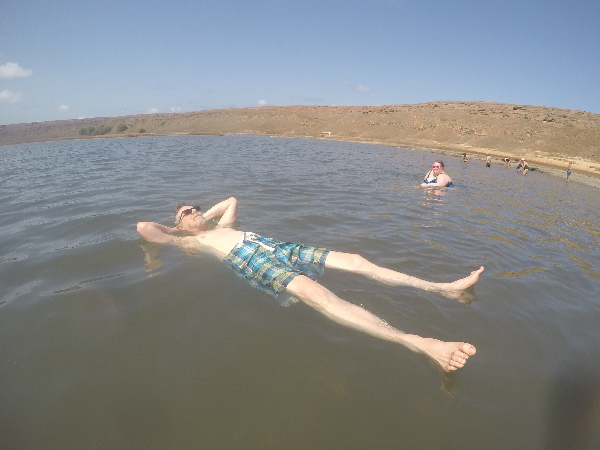
In Sal, there is the Pedra de Lume Salt Crater. Where you can see the shimmering salt flats inside an ancient crater. The highlight is floating in one of the pools. It is very similar to the Dead Sea, where you can easily float due to its high salinity.
Buracona Blue Eye Cave is a coastal cave where, as you peer down, you see the sun’s reflection causing blue water shaped like an eye. You can only see the blue eye for about an hour around midday.
Santa Maria is a lively place to shop and savour a local meal. The pier was a great place to see locals selling fish and wood carvings. Unfortunately, it was destroyed by a storm in October 2024, leaving only a small part. They hope it will be rebuilt by 2027, but I am sure the local characters wouldn’t have gone far.
In Boa Vista, from mid-June to October, you can see the loggerhead turtles laying eggs or hatching. From March to June, you might be able to spot humpback whales or dolphins. Or you may prefer a quad or 4×4 tour to explore the dunes or desert landscape.
Cabo Santa Maria is a cargo ship that ran aground in 1968. It makes an excellent photo with the waves crashing around.
Sei Rei is the main town in Boa Vista, with a harbour view and pleasant restaurants and cafes to linger in for a few hours.
Cape Verde is a fantastic place to try water sports. Due to its trade winds (November to May), it is a good place to try kite and windsurfing. Surfing and bodyboarding are also available.
Diving and snorkelling are popular because of the clear water and abundant sea life, although you need to seek advice if you are a beginner, as there are strong currents.
There are plenty of sailing opportunities, whether you prefer a catamaran or a sailboat. You can sunbathe, listen to music, snorkel, or watch for dolphins, sea turtles, or whales.
What to eat?
Cachupa is the national dish, a slow-cooked stew made with fish or meat such as pork, chicken, or sausage. Cachupa Rica is the more elaborate version, featuring more ingredients such as meat and vegetables, while cachupa pobre is the simpler, cheaper version, made mainly from corn and beans, with little or no meat or fish.
Another slow-cooked stew is Buzio; it is usually made with mussels and soya sauce, but other shellfish can be used.
If you are adventurous, try Percebes (Sea Fingers). They look a bit strange, being long and purple. To eat them, break the end and peel back the skin. It tastes a bit like squid.
Bol de cus is a steamed cake made from cornmeal and sugar. It is usually served with warm milk or goat’s cheese.
Grogue is an iconic strong spirit produced locally from sugar cane.
Practical information
- The official language is Portuguese, however most people speak Creole. We encountered no problems speaking English in tourist areas. English is taught in the schools as a foreign language.
- The local currency is the Escudo, and it is a closed currency: you can’t get any local currency until you arrive, and you mustn’t take any out of the country.
- If you’re staying only in your hotel complex, you shouldn’t need any local currency. If you are on Sal or Boa Vista, then euros are acceptable. The exchange rate isn’t as favourable, but generally, if you’re making an expensive purchase, you can use your credit card.
- Shops can be closed on Sundays or only open in the morning.
- Tourists have to pay a tourist tax of €2.50 per person per day, with a cap at €25. If you are under 16, you are not required to pay. Usually paid at your hotel.
- Every visitor, whether you need a visa or not, has to complete the traveller’s entry form at least 5 days before you travel. This form also includes the €31 airport security tax (TSA), which you don’t pay for if you are under 2 years old. If you have booked through a tour operator, check that they aren’t completing the form on your behalf and that the fee wasn’t included in their costs.
- Crime is low, although there are pickpockets you should watch out for. Our daughter had her purse taken near Sal pier.
- Flights to Cape Verde from the UK take about 6 hours, much quicker than to the Maldives or Seychelles.
- The time zone is not much different from the UK. Cape Verde is one hour behind GMT. They don’t change their clocks, so they are 1 hour behind in winter and 2 hours in the summer.
Our Visit
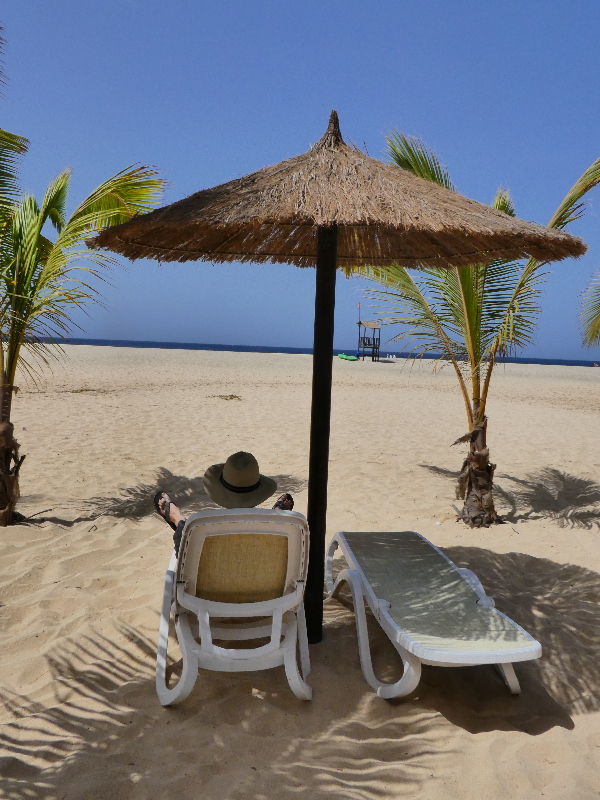
We went to Sal, our hotel was a 25-minute walk from Santa Maria. As we went with our daughter, we wanted a hotel near a town which we could pop to if the hotel food didn’t suit our daughter’s nutritional needs. We had planned to walk to Santa Maria, but it was hot, so we took a taxi.
If you are going on a fly-and-flop holiday, you will spend much of your time at your hotel complex, so it is essential to do thorough research on the hotel to ensure it meets your needs. Our hotel had five pools, which suited our daughter, and the entertainment was restricted to one area, so we could swim in peace.
To see around Sal, we could take a shared minibus, but they don’t have set timetables and often depart when full. They are usually for locals, so they don’t necessarily go to tourist attractions. You can hire a car or take a guided tour.
We chose to use a taxi. This was especially appreciated during our visit to the Pedra de Lume Salt Crater. We arranged with our driver to stay there for about 1½ hours. We saw many tours arrive and were given only a few minutes in the saltwater before they had to dry off and rush to the next location quickly. It was nice to take our time floating, drying slowly and stopping for an ice cream at the café.
We also enjoyed an afternoon on a sailboat. Our hotel sold catamaran trips, and, based on reviews, we found they were crowded, with loud music and heavy drinking. Instead, we found something better suited to us and booked a sailboat we shared with four others. We were served cold drinks and snacks, and we could relax and sunbathe as it sailed past beautiful scenery, enjoying the cool breeze.
Summary
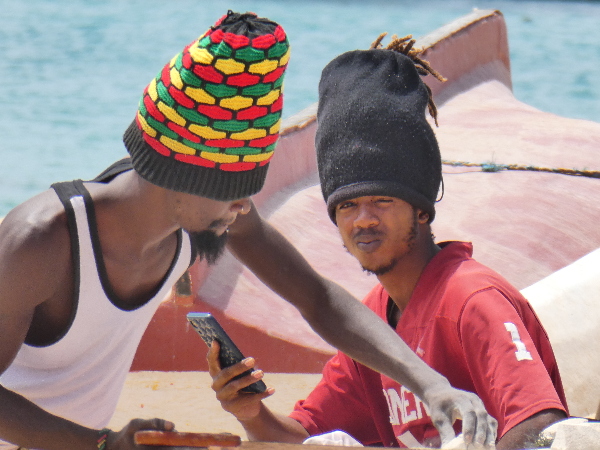
Cape Verde has beautiful sandy beaches and sunshine, just what many people long for when it is rainy or cold at home. There are many places with sun and sand, but Cape Verde is usually cheaper than iconic holiday destinations.
I found Cape Verde a great place to rest. There were a handful of places to visit to break up the holiday—enough to add variety, but not so many that I felt any pressure to see them all.
With a nice price, nice weather, great beaches and no jet lag, why aren’t you there?
Leave a Reply