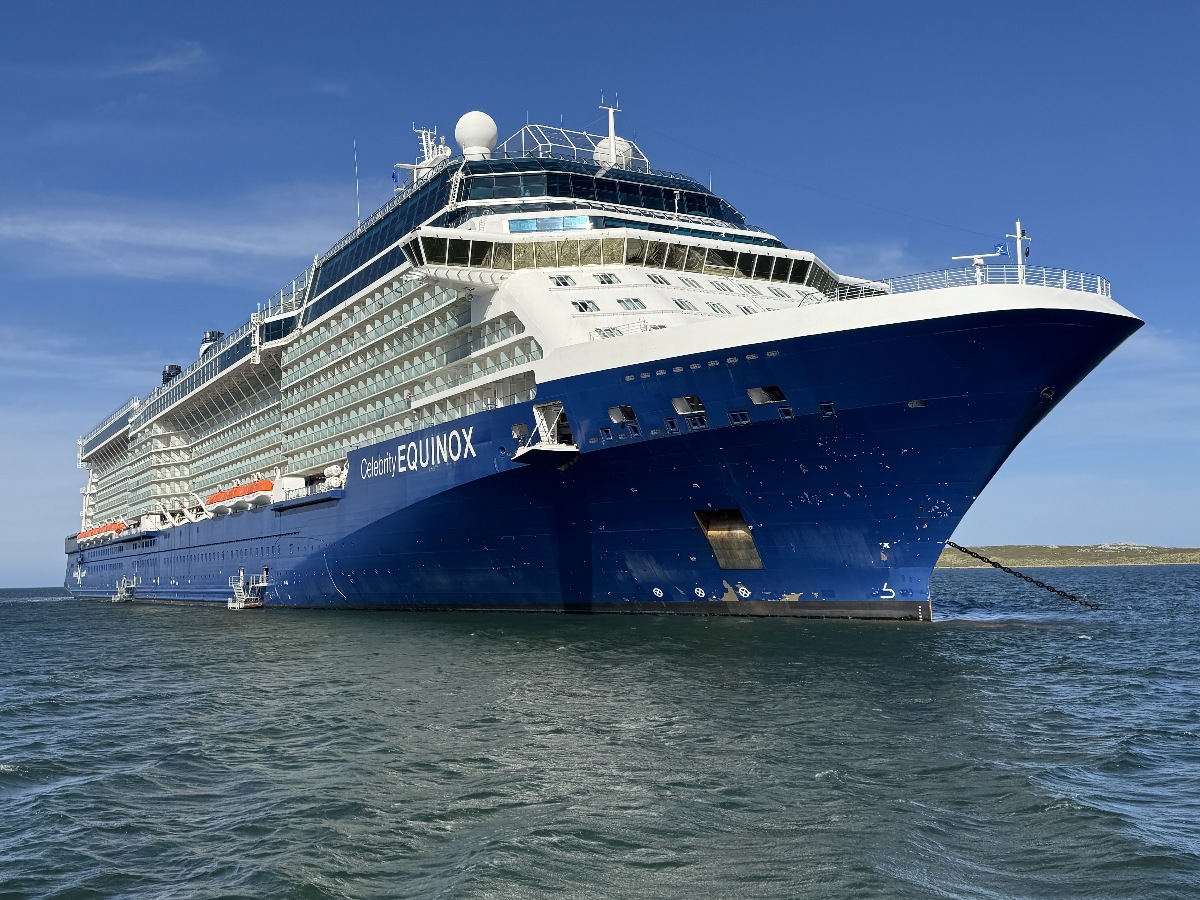
I am no expert on cruises, as this is my first proper cruise. I have been on smaller ships, but not on a large cruise ship. However, I am in an excellent position to tell you what it is like to be a first-timer, which can be very confusing if you have never done it before. I have also got some very experienced help to make sure I get my facts right.
Packing
If you are not travelling by plane to your destination port, then it can be quite liberating to find that you don’t have a weight limit. Check with your cruise line, but remember you won’t have much room to store all your belongings in your cabin. Our cruise ship said we weren’t allowed to bring furniture. It made us wonder what furniture people were bringing. I couldn’t fit my favourite swing chair in my suitcase, so I left it behind!
The list of what you can and can’t bring changes each year and by each cruise company, so check the details. Things like extension leads and irons aren’t allowed on many ships. All bags are x-rayed, and any forbidden items are removed and returned at the end of the cruise.
Clothing
Every cruise liner has a dress code, but because cruises cater to different clientele, the dress codes vary accordingly.
Bring clothes appropriate to your destination’s climate. If you have a stop at a destination with a moderate dress code, don’t forget to bring appropriate attire.
If you are going somewhere cold, such as the Arctic or Antarctic, you will need warm clothes for sightseeing and standing on the deck, but you don’t need to bring warm PJs as you will be quite cosy in your room.
It is a good idea to find out the dress code for your cruise before you book. You don’t want to go on a Cunard cruise if you are more comfortable in a t-shirt and an old pair of jeans or cut-off shorts. However, if dressing up smartly is part of the fun for you, a Cunard cruise might be ideal.
On the last night, the dress code can be less formal, since most people have packed their suitcases for the next day.
Cruises will let you know in advance what dress code is expected and advise you, once on board, what the dress code is for the various meal options. You don’t have to go to the very formal dinners or special events if you don’t want to. You will usually still find other places to eat, but make sure you have clothes suitable for the main dining area, which may not allow shorts or other casual clothes.
Norwegian Cruise Line has one of the most casual dress codes. For dinner, “nice Jeans” are allowed. A collared shirt is recommended.
You tend to find the smart level also varies depending on which part of the world the majority of the passengers come from. Some countries are happy in shorts and T-shirts, while others often wear shirts. I don’t want to insult a country by saying which ones wear and which don’t wear smarter clothes, but I was told that, since the majority of people on my cruise are from a certain country, not many men wear jackets on formal nights.
Chic night/gala evening/white night clothes
Many cruises host special nights when more formal attire is required for dinner. If you are on a short cruise, it might be just one night. On our two-week cruise, there are two nights.
For this meal, you will need to dress smarter than you did the other night. People used to wear tuxedos and long formal dresses, but that now only happens on a few ships. On the ship I am on, most men wear shirts and some wear jackets, but no one wears jeans. Normally, women wear party dresses, but on this ship, most wore trousers with a smart top because we had to pack both summer and winter clothes.
If you don’t want to dress up, you can go to the buffet instead. Check with your cruise line to see what is expected. I found the Facebook group very informative on this subject, and knowing what everyone else planned to wear gave me confidence.
They might also have White Hot or Glow parties, which require white or neon clothing, and maybe glow-in-the-dark bracelets. You don’t have to wear these clothes or attend the event if you don’t want to.
Before the cruise
If you’ve never bothered with travel insurance, now is the time to rethink it. Doctors on board the ship are very expensive. Someone on the cruise before ours was taken seriously ill and had to be medevacked to the mainland; it cost them $60,000 just for the helicopter!
It can be very helpful to join a Facebook group for the time you are travelling and for the trips before your cruise. We asked the people on the cruise before us questions about plugs and other details, and they answered while on their cruise. We are now advising people who have booked the same cruise as us, but for next year.
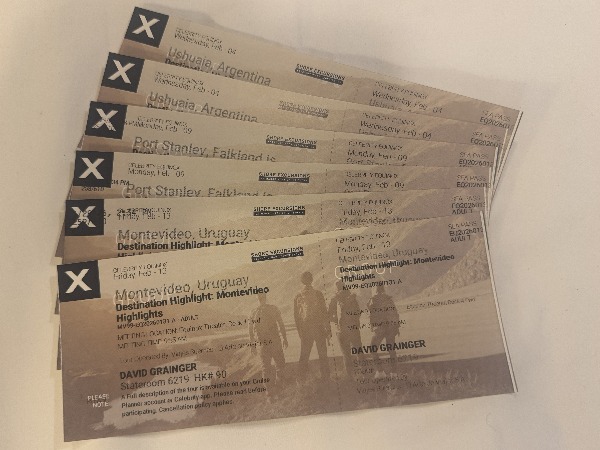
You need to book any excursions you want to go on early, before the cruise. For more details, see the section on port days.
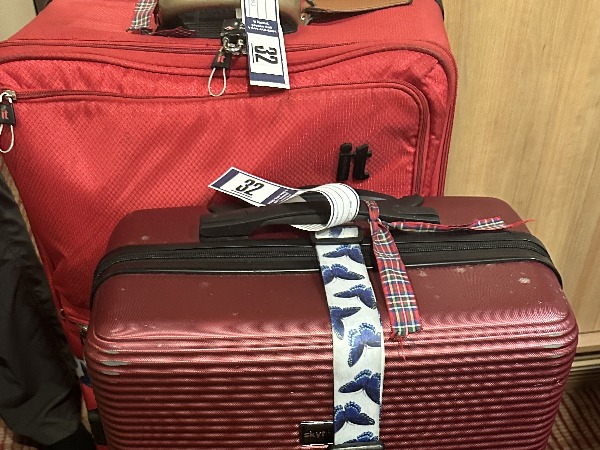
Just before your cruise, you will probably be given luggage labels to print out and attach to your suitcases. These labels are so that they can deliver your suitcases to your room. Remember to print the labels and bring a method for attaching them to your suitcase. You can buy luggage tag holders to put the labels in, but we just used Sellotape to stick the labels to our suitcases’ handles.
Viruses spread easily on large ships, and the cruise liners do everything they can to stop the spread. Having lots of sick people on board only makes their work even harder. You might be sent a medical check form beforehand, asking how you are and if you have a temperature or feel sick. I am sure most people won’t admit they have a cold because they don’t want to be refused boarding. However, it is a legal document, and if they find you have lied, your insurance company might not cover you, and you might be asked to leave and cover the cost of disembarkation.
Getting to the Embarkment Place
If you live in the UK, going on a Saga cruise from a UK port can be very easy, as they often can pick you up by car from your front door. But if you have to fly somewhere, allow plenty of time in case your plane is cancelled or delayed so you can still catch the cruise. A hotel near the port before and after your cruise is the safest option. Ships are more reliable than planes, so the time your cruise returns is more likely to be accurate, but our cruise was late returning after a cargo ship broke down in a narrow channel.
Arriving at the Port
Large ships can carry between 3,000 and 4,500 people, and mega ships can carry up to 6,500. When we left, two cruise liners were leaving from the same port. When you have 4,000 to 6,000 people all heading to the port at the same time, as you can imagine, it can be chaos. Before your cruise, you can choose a time slot or be assigned one to arrive at the embarkation point. We managed to get the first slot of the day, which worked out well for us, as we could explore the ship before most people boarded.
There is often priority boarding for frequent travellers or those staying in premium suites. The busy period is around midday and early afternoon. If you arrive later, you might miss your lunch, but there will be less chance of a queue, and your cabin might be available straight away. Just don’t miss the ship by leaving it too late.
If you need a taxi to the port, it is best to prebook, as it can be difficult to find a free taxi when everyone else wants one.
Your taxi will have to join a long queue of other taxis waiting to drop off passengers, so factor this in when deciding what time you need the taxi.
Embarkment procedure
First, hand your suitcases over for delivery to your cabin later. It can be as late as 6 pm. You also need a day bag to store all your valuables and medicines. Put anything else in the bag you might need before your suitcase is delivered, e.g., your swimsuit or sun cream.
If you arrive too early at the port, you might have to wait until your time slot. When it is your correct time slot, you can go to the check-in counters. You will be given any necessary paperwork, and you will need to show your passports.
You might have to hand over your passport at this point. Don’t worry, you will get it back. They need to keep the passports because it is the only way to process a large number of them quickly when travelling to other countries.
You will then normally be transferred to the ship if it is far away. Before you get on board, your ticket will be checked. You can then walk up the gangplank.
You probably won’t be able to go to your room straight away, but there should be an announcement when the rooms are available. In the meantime, you can explore the ship, start trying the food if the restaurants are open or have a dip in the pool.
On the day of departure, you will need to attend a safety drill. On the back of your cabin door, there will be a map showing where to meet in an emergency. There will be details on when to attend the safety drill, though it’s often left up to you to pop in as soon as you can. They check that everyone goes to the drills; it is not something you should skip, and some ships won’t leave until everyone has completed their safety drill.
On celebrity cruises, you watch a quick video showing how to put on life jackets, then go to the assigned emergency muster point to confirm you know where to go in an emergency.
How to know what is going on
Things can change on board, and some cruises are good at keeping people informed, while others are not. Timings can change, or port stops can be cancelled. So you need to keep up to date with the information.
Often, the captain will announce at least once a day to let you know what is going on. These announcements are made in the public rooms and can be heard in your room if it is important.
There is often a lot of information on your TV, so it is worth checking it out. You should download your cruise App. You can use the App to book restaurants and excursions, view menus, find restaurant opening times, see what entertainment is available, and view a map of the ship.
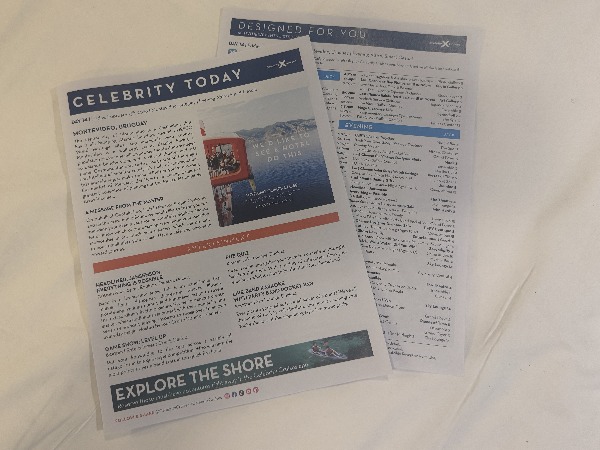
Every day, you may receive a printed daily information sheet, or you may find the information on your TV screen.
If you have any problems or don’t understand anything, guest services are normally open 24 hours a day.
SeaPass
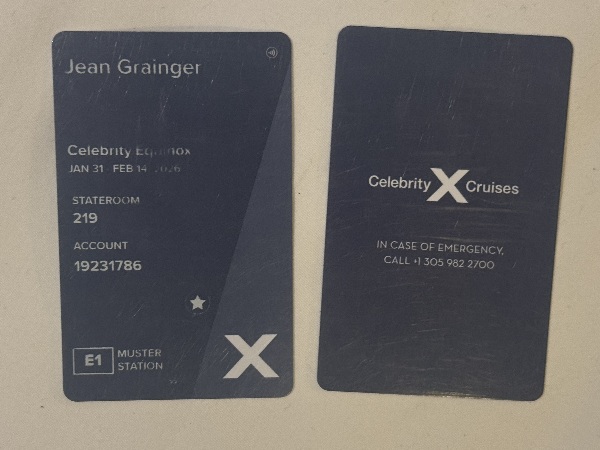
The SeaPass is the most important item when you are on a cruise. It is usually the size of a credit card, although it can be a medallion. Your SeaPass might be collected from your room door or given to you at check-in.
Your SeaPass will allow you to open your cabin door and is an onboard charge card to be paid at the end of the cruise. You will also need to use it when you get on and off the ship and as you enter restricted port areas. It is the one card that does it all. If you lose it, then it can be replaced, but try to keep it safe, as it is your room key and onboard account. Occasionally, if you keep your SeaPass on your phone, you can deactivate it.
Drinks and internet
The basic cruise package includes some food and transport, but if you want drinks or the internet, it will cost more. For a mainstream cruise, extras can cost 40-80% more than your cruise fare.
On board, you will normally be able to get basic coffee, tea and cold drinks for free. You might have to go to the restaurants to get them, not the bar, lounges or poolside.
You can pay for a package that covers all the drinks. The package covers both alcoholic and/or non-alcoholic drinks. Both people in a berth have to have the same package, so you can’t share drinks.
Some people prefer to pay for their drinks as they go along because they know they don’t drink a lot.
As a first-time cruiser, it can be difficult to know which drinks are free or not. The nice latte at the cake café is not free, nor is the water given out in bottles on our ship.
The internet can be very costly, and I know some people wait until they get to port and find free Wi-Fi at a café. This won’t work if your cruise has many sea days, e.g., an Antarctica cruise. You might be able to share one internet package between the two of you in the same berth; we managed to, but if you are both heavy users, this might cause problems.
Tipping
Tipping is expected on a cruise, and it can be expensive; each cruise line has its own tipping policy.
Some cruises include tips in the cruise price. Others will charge you a set amount each day while you are onboard. Cruises charge different amounts; the amounts depend on how long the cruise is or where they are sailing. It varies a lot when it comes to children; Fred Olsen Cruises don’t charge for children under 12, whereas Costa Cruises doesn’t charge for children under 4 years old.
Cunard Line does not share tips with staff in the Casino or spa, so if you use this service, you will need to tip them separately.
Automatic gratuity can be added when you use the bar, room service, or spa; it will be a percentage of what you spend there.
It is best to review the tipping policy before your cruise so you don’t get any nasty surprises when your bill arrives at the end of the trip. You might prefer to pay for your tips before you take the cruise.
At the moment, most gratuity charges are around £14 per person per day, unless you have booked a suite, in which case they are higher.
Even a cruise that wants you to pay for tips upfront will often allow you to adjust the amount you pay. A friend does this on every cruise so they can tip the people personally who have been helpful to them. This, however, means the people behind the scenes who might be working equally as hard will get less money.
Meals
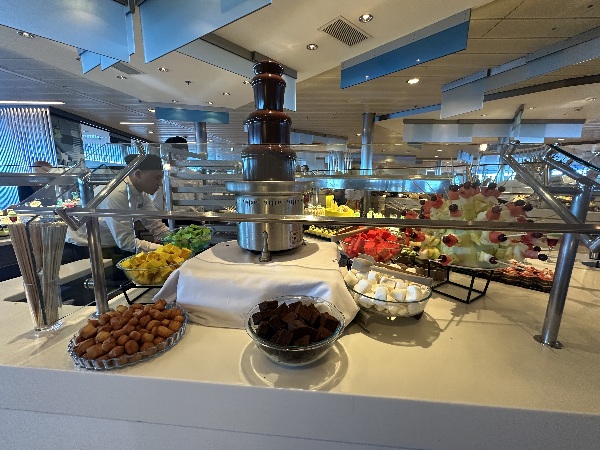
There are usually multiple eating places on a cruise. You won’t go hungry, as food is usually available 24 hours a day, or at least until the early hours of the morning. If you are not careful, you will put on weight.
Breakfast is generally served between 7 am and 9 am, and lunch between midday and 2 pm, though this can vary slightly depending on the cruise and the ship’s schedule. You can come in anytime during that slot.
There is usually a buffet restaurant where passengers can help themselves to the food, and the dress code is casual. Some people find the food a bit monotonous because the choices don’t change much. On celebrity cruises, they change the main focus each lunch and dinner time, and by choosing the new options, you can keep the meals interesting.
Casual eating points can be found on many cruise liners, especially near the pool. At these places, you could get BBQ food, hot dogs, pizza, bakery goods, or ice cream. They can be free or charged, it depends on the cruise liner.
There is often a more formal dinner option with set places and waiter service. You might have a choice of a table for two or a larger table where you meet other people.
You can choose between flexible and traditional dining. Flexible dining is when you come to dinner when you feel like it, but you might have to wait if no table is available. If you go early, you will probably have a shorter wait and be more likely to find a table for two. However, a later dining option can be less hurried as they don’t need you to leave quickly for the next people.
Traditional dining is when you have a booking for a set time. You won’t have to wait, and you can specify your table size.
You have to decide whether you want the early or late slot. You will have to arrive at the beginning of your slot. The early slot is suitable for families with children who need to go to bed early. Later bookings are better for those who want to spend more time in the port of call or relaxing in the pool. There are likely to be fewer young children at the late seating.
Specialist dining restaurants are similar to first-class restaurants on land. They are often themed, such as Italian, Japanese, or a steakhouse. You have to book them in advance; this can sometimes be done before your cruise. If not, try booking while waiting to embark, as they can fill up fast. These restaurants can be pricey, but they can be a wonderful experience and a special treat.
There is often room service available. We have been ordering coffee and, sometimes, a continental breakfast, which was free.
Vegetarians should have no problems cruising, as it is now a common request. If you have other special requests, you should contact the cruise liner before the trip so they can make the necessary arrangements. If you have a severe allergy, make sure the cruise knows in advance and, once you have arrived, talk to the head chef to make sure he is informed, and have your waiter/server know too.
What to do on Sea Days
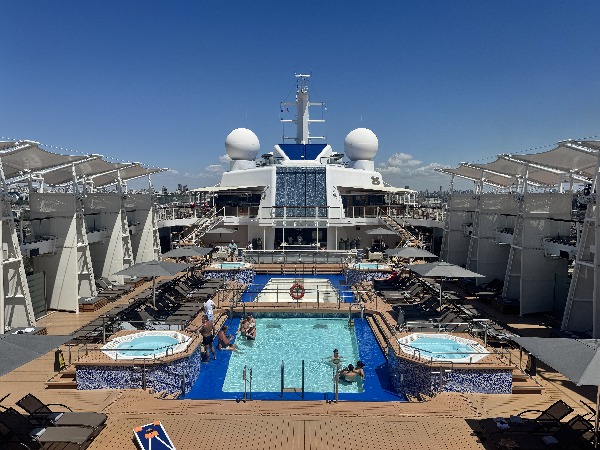
Sea Days are days when the ship doesn’t land anywhere. On our trip to Antarctica, we had many sea days. Some people don’t like sea days, but I found them relaxing. I was shocked at how much there was to do on board the ship. I knew about evening shows, but on our ship, something is going on all day. It starts with morning stretches at 7:00 am and finishes after 12:00 pm with a late-night party.
On cruises, you can go to lectures, learn new skills like photography or cooking, go to the gym or take yoga or pilates classes. Some ships have climbing walls, bumper cars, ropes courses and crazy golf. Our cruise had more sedate activities such as colouring in, meditation and garden bowls. You must choose a cruise that fits your lifestyle. Do you prefer a competition to find the hairiest chest or prefer to spend your time in the library or playing chess?
Our Antarctic cruise had lectures on various animals, which suited most passengers; however, there was still plenty of partying for those who wanted to spend their evenings dancing the night away.
Many activities are free, but activities like glass blowing, hairdressing, and spa treatments have fees. Usually, there is a casino where you can attempt to make some money.
If you don’t enjoy all the activities, there are always places to hide away for a bit of peace and quiet.
Sunbathing is a popular way of whiling away the time. Even on our Antarctic cruise, people were in the pools or the jacuzzies. When it got too cold, there was an indoor area with a pool and jacuzzies you could use.
Tender or dock
When a ship arrives at a port, there are two types of disembarking: one is at a fixed pier or quay, and the other is by tender. A tender is a smaller boat that can take about 100-200 people, and, as it is smaller, it can pull up to docks that large ships can’t.
When a ship arrives at a port, it can take a while to complete all the paperwork. Once the paperwork is completed, an announcement will be made letting you know you can leave.
You can then walk off the ship if it is docked.
If a tender is needed to get the passengers ashore, then the procedure is different. The first people allowed to leave are usually those booked on the cruise tours, and then those with more expensive class suites. The rest of the passengers often need to pick up a tender number and wait until their number is called. Waits can be up to two hours.
If you have chosen an official tour and want to explore the place on your own as well, then choose a morning tour, as you will have more time ashore.
Port days
On port days, some people like to leave the ship and wander around. However, occasionally the dock is a long way from the town.
A small number of people prefer to stay on the ship; it is a lot quieter, and you might have the pool to yourself. There might be fewer things open or fewer activities planned, but you could find things like spa treatments at a reduced price.
You can usually book excursions once on the cruise, but it is best to do so beforehand if it is important to you, as they can fill up and sometimes be fully booked before the cruise starts.
The excursions organised by the ships are always very pricey, but the ship will wait for you if your party is delayed when returning. You can usually find much cheaper excursions from private companies, but if they are late getting back, you will miss the ship, as it won’t wait. A few companies say that if they are late getting back, they will arrange for you to get to the next port. Sometimes the ship has to change its route and not land where it was planned. If you have booked an independent excursion, you might find you never managed to go on the excursion, but still have to pay for it.
Missing the cruise liner
If at a port, you fail to get back to the ship when it is due to leave, the ship won’t wait. Unfortunately, things happen, such as a car accident causing the road to be blocked, or you fall asleep on the beach. One of the favourite pastimes on a cruise is watching for pier runners, those people about to miss the ship.
It will be your responsibility to get a train or a plane to catch the ship at its next stop or the one after. You will have to pay all the expenses out of your own pocket. The only time you will not have to worry is when you are on the cruise’s own excursion.
There are things you can do to reduce your risk of being late.
- Take a photo of the time you are due back, so you don’t forget it.
- Plan to get back a bit earlier, so you have some slack if things go wrong.
- Do the things that are furthest away from the ship, first.
- Set an alarm on your phone to remind you when you should be returning or to wake you up if you were sunbathing on a beach.
- Book the cruise’s own excursion if you are seeing a site a long way from the ship.
- Make sure you are aware of which time zone the cruise is using. Sometimes it is not the local time; it uses the departure port time zone. In this case, make sure your phone hasn’t automatically changed to the local time zone.
- At large ports, there can be two docks, so make sure you are clear which dock your ship is berthed at.
If you do miss the ship
- See if there is a port agent for your cruise liner based in the port. Sometimes the ship’s crew will leave any essential items for missing passengers with the port agent, such as credit cards, passports, or tablets. The port agent can help you arrange your own transport getting back to your cruise ship.
- Contact the ship and let them know what is going on.
- If there is no port agent, phone customer service and see if they can help you.
- If you find yourself without funds or your passport, contact your embassy. They won’t pay for you, but can advise you on how to get help.
Children
Many cruises are very child-friendly and have lots for them to do on board. Very fussy children might find buffet meals more suitable than formal meals, as they offer a wider selection of food.
Often, ships have restricted areas for children, such as an adults-only pool or a children-only area during certain times.
Some cruises, like the one I am on now, allow children, but they are geared towards adults. There is a children’s area with game consoles and other games. There have also been children’s completions. However, out of nearly 3000 passengers, there are fewer than 20 children. An Antarctic cruise is a bit different from a normal one, but if you have children, you might want to choose one that is suitable for them. Some cruises are adult-only; they tend to have a more formal atmosphere.
Disabled or Elderly
Many times, when I have talked to people about cruises, they have said they will do that when they are elderly. For some people who like to travel, a cruise is an option when they aren’t as active.
Some cruises offer rooms adapted for wheelchair users, but they are limited and must be booked well in advance.
Sometimes you are not allowed to bring your own wheelchair; instead, you can use one provided by the cruise line. One woman told me how the wheelchair they provided was bigger than the one she had; her husband found it very hard to push around when they docked, and it didn’t fit through her cabin door.
Getting on and off the ship can be problematic for those who can’t cope with steep slopes, as the gangplank can be at a sharp angle. I saw one lady get very distressed as she struggled to get onto a tender; she ended up on her knees and had trouble getting up, even with people trying to help.
I was impressed by how the crew members on our ship helped the elderly and those with walking sticks when at the buffet restaurant, especially during rough seas. They would hold their arm and their plate for them and walk with them around the food counters.
Once you are on the ship, things are easier as there are lifts everywhere and wheelchair spots in the theatre. However, if you are unsteady on your feet, a rocking ship won’t make things easier. Choose a very big ship that is more stable.
Many excursions are unsuitable for the less able, but they often indicate the physical level you need when booking.
The end of the cruise
A couple of days before the cruise ends, check your shipboard account and sort out any issues now. If you leave it until the last day, you will have to join a long queue. You will need to check your account again on the last day, but hopefully, everything is correct since you last checked. If you have provided your credit card details, the bill is settled automatically.
If you are flying home, you might find your ship has an internet centre where you can check in for your flight and get your boarding pass printed out for a fee.
Hopefully, you will be offered a choice of leaving times. If you have an early flight, it is best to speak with guest services at least 24 hours before your cruise ends.
The day before the cruise ends, you will need to pack. You will be given luggage labels to attach to your luggage. Your luggage must be left outside your room by 10 pm or midnight. Anything you need for the night must be packed in your daypack, which should also include any medicines or valuable items.
Some ships allow passengers to self-disembark; this means you keep your luggage with you and carry it off the ship yourself at any time during disembarkation. If you are fit and able to carry your own bags, this might be an easier option as you don’t have to leave your bags outside your room and sort out which items you need for the next day. However, going down a steep gangplank with your suitcases isn’t easy.
Disembark
On the day of disembarkation, things can be a bit different; for example, there may not be room service, and breakfast might be served earlier. Facilities such as pools, the gym and the shops will be closed. The photo gallery will remain open for a while, but it is best not to leave it until the last minute. There are often long queues, and sometimes they start throwing away photos early; there may be an option to download them later.
Once the paperwork is complete, the Captain will announce when disembarkation begins. This can be very early in the morning. You will have to leave your stateroom from about 7:30 am and can wait in one of the lounges or have breakfast, though sometimes it is later. Take your SeaPass with you; you need to show it as you leave so they can check who has left the ship.
If you have chosen not to walk off and self-assist, you should have been informed of your time slot and tag number. Usually, you can request your preferred time beforehand.
Announcements will be made saying when your tag or colour code can disembark. You will then walk or be taken to the cruise terminal. Here, your suitcases will be lined up in your colour code or tag number, ready for collection.
Taxis are normally available and waiting to take you to your next destination. If you have requested an airport transfer, a bus will be waiting for you. Some people book a city tour with the cruise company, which is a good idea if your flight is late in the day and you haven’t already explored the town. They will look after your luggage, which is a big advantage over touring independently.
Summary
I am glad we went on a cruise, and we enjoyed it. We met lots of people who enjoyed travelling, and we loved swapping travel stories. Would I go on a cruise again? Probably not, unless it was the easiest way to reach a destination. I prefer to spend more time in places with fewer crowds. However, cruising was much better than I expected. The meals were great, and the crew were very helpful.
On our last evening, we ended our trip with a walk along the jogging track. We were the only people walking under the stars in the middle of the ocean; everyone else was eating, at a show or in the bar. Even if you don’t think cruising is for you, give it a try. We were surprised at how easy it was to find an empty corner in a ship full of people. Unless you try it, you will never know if it is your perfect way of travelling. Bon voyage.
.
Leave a Reply