
We have got our car stuck in the desert sand, waved goodbye to a ship we had missed, been robbed, got lost in a forest that was on fire, and once had to sleep in a port under a tree. So we have plenty of experience with mistakes.
After years of travel, I finally had a holiday without any mishaps. Normally, they aren’t major, but they have been stressful at times.
Unfortunately, we don’t seem to learn from the mistakes. We think, ‘That won’t happen again.’ And then it does. Or we find new mistakes to make.
So, here is a list of 9 common travel mistakes and how to avoid them. Hopefully, it will improve your chances of having a smooth and enjoyable holiday.
1. Check all your paperwork
I know checking paperwork is boring. Nobody starts a holiday thinking, ‘I can’t wait to check my passport.’ But it can save you a lot of trouble.
Have you ever noticed that when you fill in an online form, the settings sometimes revert to something different, perhaps the date or the number of people?
Checking everything before you leave gives you a chance to spot these problems before you arrive at your hotel and discover you are booked in for the following week.
Check the following:
- Flight tickets: day, time, airport and name spelt correctly.
- Passport: Is it still valid? Do you have enough months left? Some countries require your passport to have several months of validity remaining, sometimes six months. Is it damaged?
- Visas and other documents: Do you need a visa? An increasing number of countries require you to complete a declaration form before arrival.
- Accommodation: Check the dates carefully. Don’t forget that the American date format is different.
- Car hire: Are you taking the same credit card you paid with? Often, the credit card holder has to be the driver.
- Attractions: Are you going to any sights that need booking?
We once turned up at an airport to drop off our bags the night before an early flight, only to discover that David’s passport had the wrong nationality/citizenship.
We had been using that passport for years and had never noticed. Now, suddenly, we were standing at the airport, wondering whether he would be allowed on the plane.
It is amazing what you can fail to notice until you suddenly need it.
The passport office had made the original mistake, but we were the ones who hadn’t spotted it. He did catch the plane in the end, but due to the confusion, I left my driver’s license at home, which is not a good idea on a fly-drive holiday.
2. Get a firm grip on the currency situation
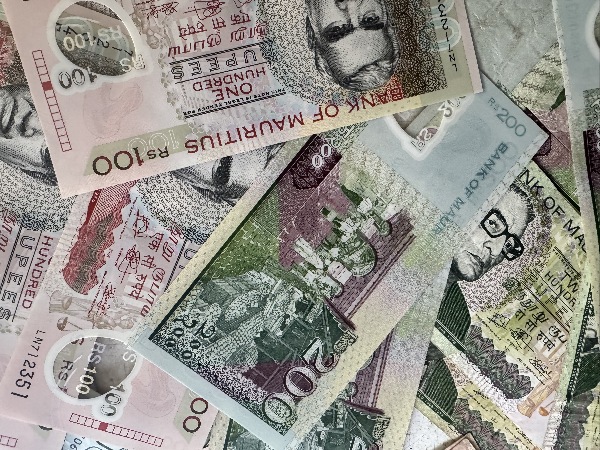
If you can get your currency beforehand rather than at the airport, it will usually be cheaper. You can even order it for delivery to your house, which is very convenient.
Ask for a few small notes, too, as taxi drivers might not have any change.
Take a close look at your new currency and make sure you are clear about the exchange rate.
Be especially careful with currencies where everyday prices involve lots of zeros. It is surprisingly easy to make a mistake when you are dealing with all those zeros.
A middle-aged couple asked me recently what a place was like because they didn’t know if it was worth the high cost. It was only a couple of pounds, well within the budget of an international traveller. I guessed they had got confused by the currency.
It is also worth checking beforehand how much a taxi from the airport should cost. Don’t forget that they might charge extra for a drop-off fee, a toll road or even luggage.
Also, check the country’s tipping policy and the normal rate. Tipping varies enormously around the world, and getting it wrong can be awkward.
Once, we were paying to enter a fort in Jordan when the man gave us some small change. He then did nothing until my husband looked at him, waiting for the rest.
Understanding the currency can be really important.
3. Allow enough time for flights

I was on a flight that took off an hour late with a short layover. I spent the whole of the first leg, from London to Dubai, regretting a booking I had made for two days later. The booking was for an attraction that was a major reason for visiting that country, and I was becoming increasingly convinced we wouldn’t make it.
By the time we landed, I was mentally preparing myself for an expensive change of plans.
It turned out we did make it, and I discovered that I can run with a rucksack to the farthest gate in an airport without having a heart attack.
It didn’t feel possible at the time!
Allow enough time between flights, particularly if you have an important connecting flight.
I usually allow at least two hours between connecting flights, and more if I need to change terminals.
I would even give myself a three-hour layover if the second flight has not been booked as part of a through-journey with an alliance airline. If you miss the second flight, you might have to pay for another ticket.
There are worse places than airports to wait at.
In the UK, most airports recommend arriving two hours before a local flight and three hours before an international flight, but a common mistake is not allowing enough time to get there in the first place.
You might have a queue on the motorway, a cancelled train or a bus that doesn’t turn up. You can almost guarantee that the one time you desperately need your transport to be on time is the one time something goes wrong.
4. Don’t presume everything is the same as at home
I find it strange that people travel to see different places but expect everything to be the same as it is at home.
I have heard an American demanding face cloths in their bathroom and a British person wanting tomato sauce with every meal.
Things are different when you are abroad.
That attitude becomes a much more dangerous mistake when it comes to safety. In different countries, safety standards and regulations can vary widely.
Your hotel room balcony wall might be much lower than you are used to; motorbikes might drive on the pavements; hotel windows might open fully. Just be aware that things might not be the same.
Something completely normal at home can be restricted or even illegal elsewhere. This can include medicines, tattoos, clothing, behaviour and unmarried couples sharing a room.
If you go to another country, you have to obey its rules, just as you would when visiting someone else’s house.
Just check the basic rules before you go, and assess safety situations for yourself.
5. Plan your itinerary carefully

There are four common mistakes people make with itineraries.
Planning too much
I always try to squeeze as much as I can into a holiday, but even I realise that rushing around all the time is exhausting.
You are supposed to enjoy your holiday, not come home needing another one.
Not allowing enough time to get places
Google Maps might estimate it takes 3 hours 40 minutes to travel the Great Ocean Road in Australia, but the road is very curvy. We drove along it in a motorhome in the dark and pouring rain, slowly winding our way around the bends while wondering why we’d thought this was a good idea.
It took much longer than Google estimated.
Sometimes the journey is part of the experience, but it is much less enjoyable when you are worrying about whether you will arrive before dark.
Not checking that places are open
If you don’t like to plan holidays, at least make sure the places you want to visit are open.
I know a couple who were going to leave the highlight of their weekend break until the last day, until I pointed out that it was closed.
Places do close midweek or early on certain days. There might also be public holidays or religious events.
I have even tried to get petrol on a Sunday and had problems.
Seeing too much of the same thing
A place might be famous for its castles, temples or shrines, but you don’t have to see every single one.
You will suffer from overload if you do.
I realised I had made a mistake in Berlin when we saw too many museums about the Second World War and its cruelty. Of course, they were important and interesting, but after a while it was all becoming rather depressing.
We had reached the point where another museum was not going to improve our understanding of history; it was just going to make us miserable.
We changed our plans and did something completely different.
Sometimes you need a break from sightseeing.
6. Keep your valuables safe
Three times, people have tried to rob us, but only once were they successful.
You are more likely to be robbed on holiday because the places that attract tourists are often the same places that attract thieves.
A few simple precautions can help:
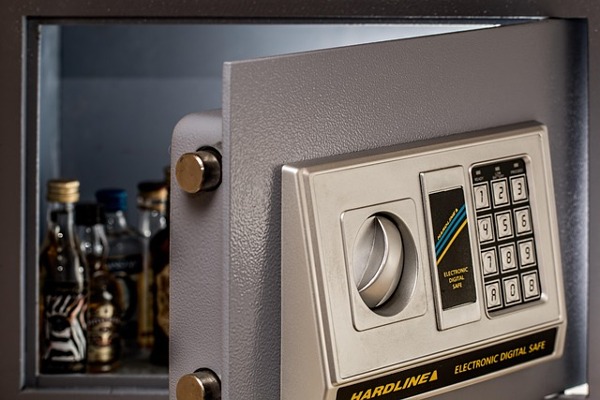
- Keep valuables in the hotel safe.
- Don’t keep your phone or wallet in your back pocket.
- Keep backpacks in front of you in crowded areas.
- Don’t leave a handbag hanging on the back of a chair in a restaurant.
- Tuck money away in your handbag rather than leaving it at the top.
- In high-risk areas, keep only the small amount of cash you need for the day somewhere accessible, with the rest tucked safely away.
- Where allowed, leave your passport in the hotel safe and take a copy with you.
We were once on a train when a man wearing a jacket over his shoulders reached into my husband’s pocket. I pushed him away.
Being a polite person, I apologised to him before I realised what I was doing. He quickly moved down the carriage and got off at the next stop.
Watch out for people with a jacket over their shoulders, and for people offering to remove bird poo from you. Seemingly innocent approaches, such as someone asking for directions, for example, can occasionally be used as a distraction.
7. Get travel insurance
Travel insurance is one of those things you hope you never need, but really don’t want to be without.
- Get travel insurance as soon as you book your holiday, in case something happens and you are unable to travel.
- Answer all the questions on the insurance form honestly and check whether you need to tell the insurer about any changes before you travel. Even medical tests that turn out negative should sometimes be included. Otherwise, you could risk having a claim rejected later.
- Don’t do high-risk activities unless your insurance covers you. Even riding a donkey on a beach has apparently been considered high risk!
- Don’t have an accident after drinking. I know nobody plans to have an accident, but alcohol can also affect whether a claim is covered, particularly if it contributed to the accident.
Sometimes it seems that insurance companies want you to stay perfectly still, not drink anything, not do anything remotely exciting and never have been ill or seen a doctor.
But travel insurance is still worth having.
Some medical bills abroad are absolutely eyewatering.
Not all insurance companies are the same, and we have found some very helpful when we needed medical help abroad.
8. Sort out your phone roaming charges

Before you go, check your mobile provider’s website to see how much calls, texts and data will cost in the country you are visiting.
There might be add-ons you can buy before you go to reduce the cost, or you could switch to a local SIM card when you arrive.
eSIMs are also very useful and convenient. You don’t need a physical SIM card, and if your phone has dual-SIM capability, you can use your home SIM and an eSIM from your destination.
Just make sure your phone isn’t locked to your network; otherwise, you might not be able to use another SIM.
If you don’t do any of the above, you may want to turn off roaming on your phone to avoid unexpected charges.
A holiday is expensive enough without returning home to discover that your phone has spent the entire trip downloading something you didn’t know about.
9. Don’t overpack
This is a very common travel mistake.
It becomes a problem if the suitcase gets too heavy to lift comfortably or if you have to pay an excess baggage charge.
It isn’t always easy to pack light when travelling between different climates and needing both smart and casual clothes.
This was certainly the case on a recent trip to Antarctica, when I needed smart clothes for a cruise as well as proper winter clothing.
If you go over the allowed weight, you might have to pay more or buy another bag and pay for the extra bag to travel.
My daughter weighed her bag and then decided to add a few extra things because she was going away for a year.
Unfortunately, “a few extra things” turned out to be enough to push it over the limit.
We were at the airport when we discovered that her suitcase was over the limit. We then had to find a new bag very early in the morning, when most shops were still closed.
It was a very expensive mistake.
A few things that help:
- Weigh your bag and don’t add anything else after the final weigh-in.
- Pack the essentials first. Then add other things if you still have room and weight available.
- Remember that you can wash clothes, or get the hotel to do it for you. It doesn’t take long to freshen them up.
- Leave some room if you like buying souvenirs.
- Take clothes and shoes that can be used with multiple outfits.
- Limit the number of things you take in the “just in case” category.
Summary
Some things are out of your control, and even experienced travellers make travel mistakes they later decide weren’t the best idea.
You might not have the perfect holiday, but at least you can aim for an enjoyable one.
And when things do go wrong, that’s often when the most memorable stories come from.
After all, we wouldn’t have nearly as many travel stories to tell if everything had gone perfectly.
Leave a Reply